Click to enlarge:
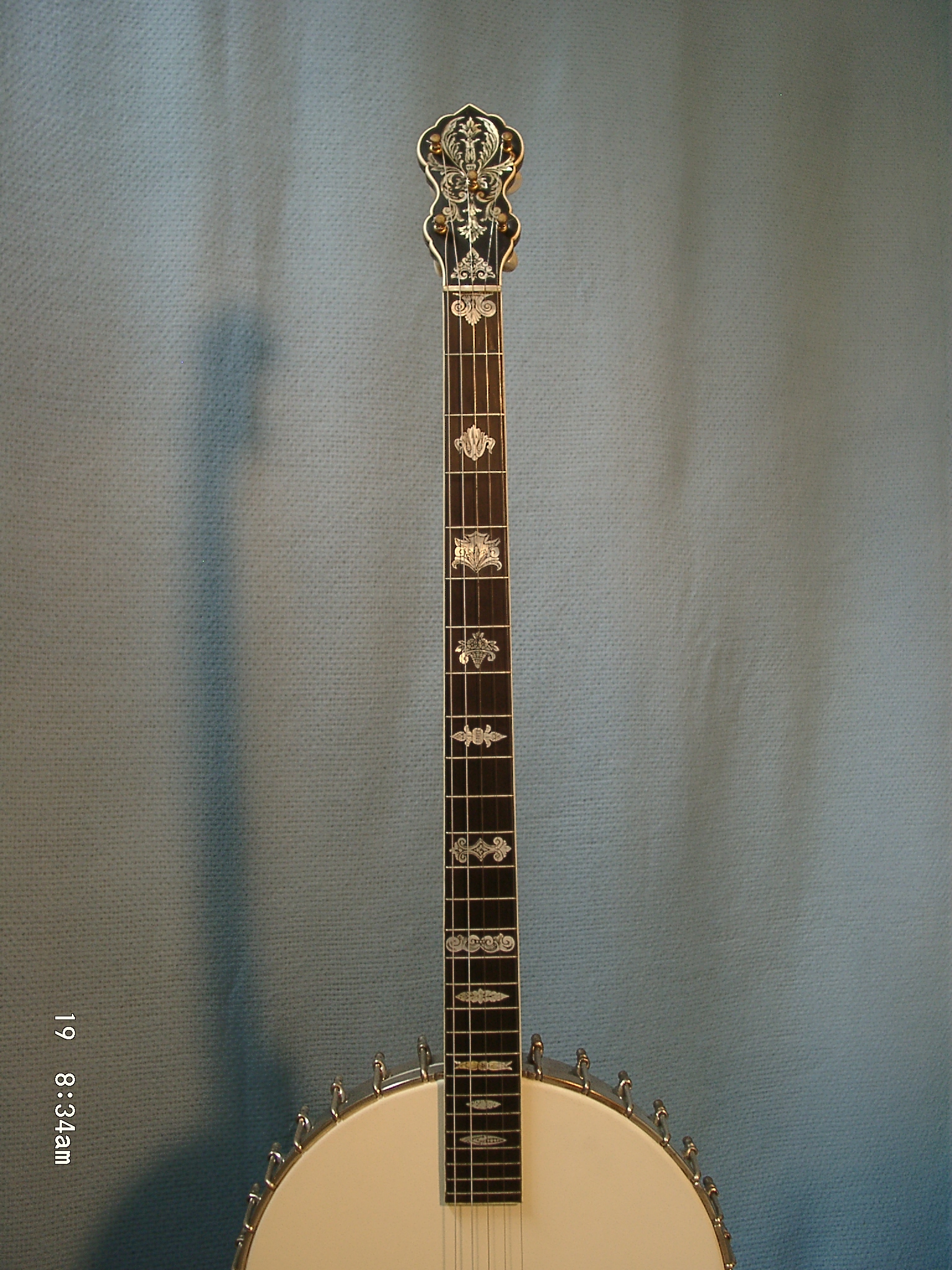
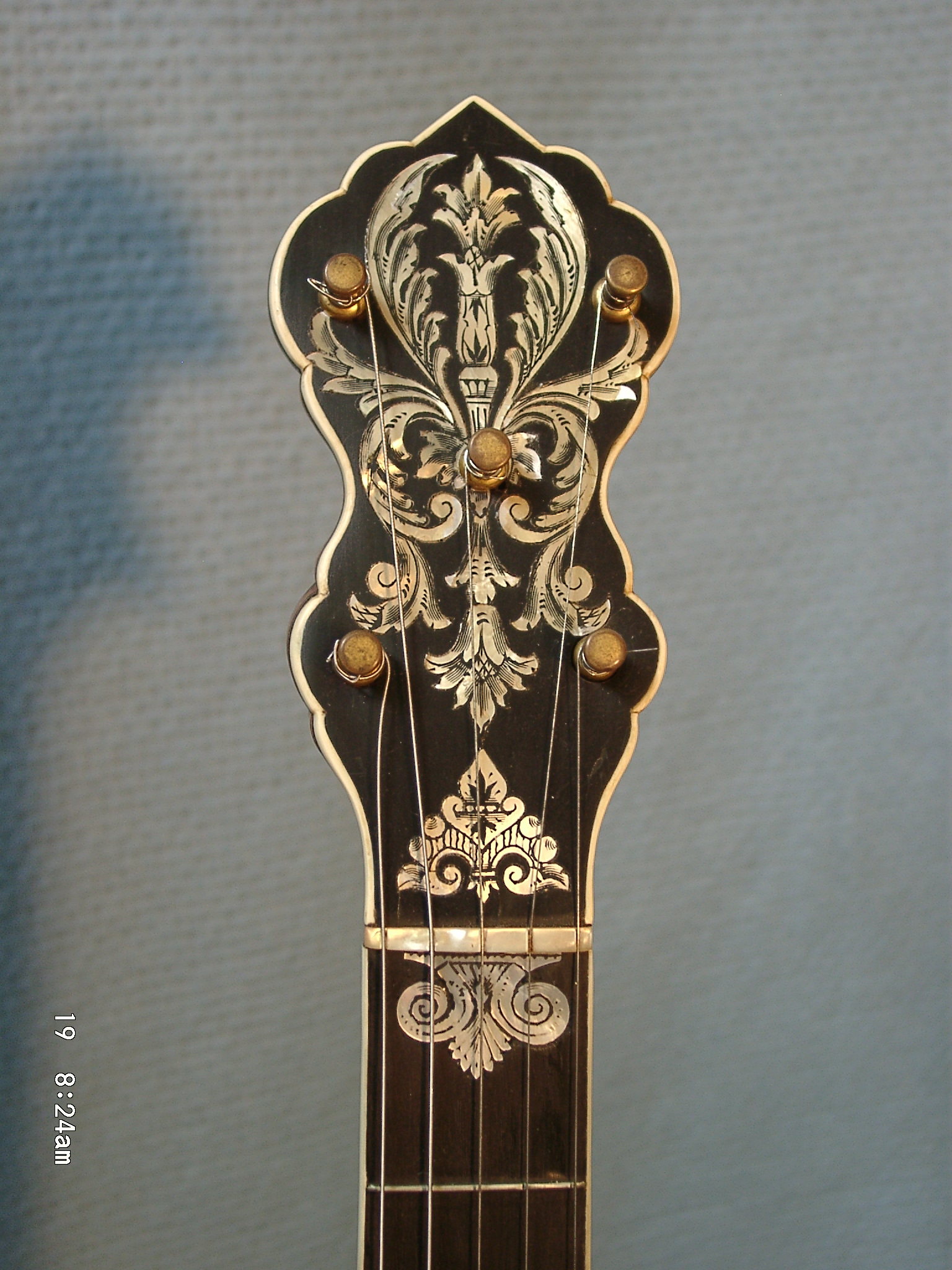
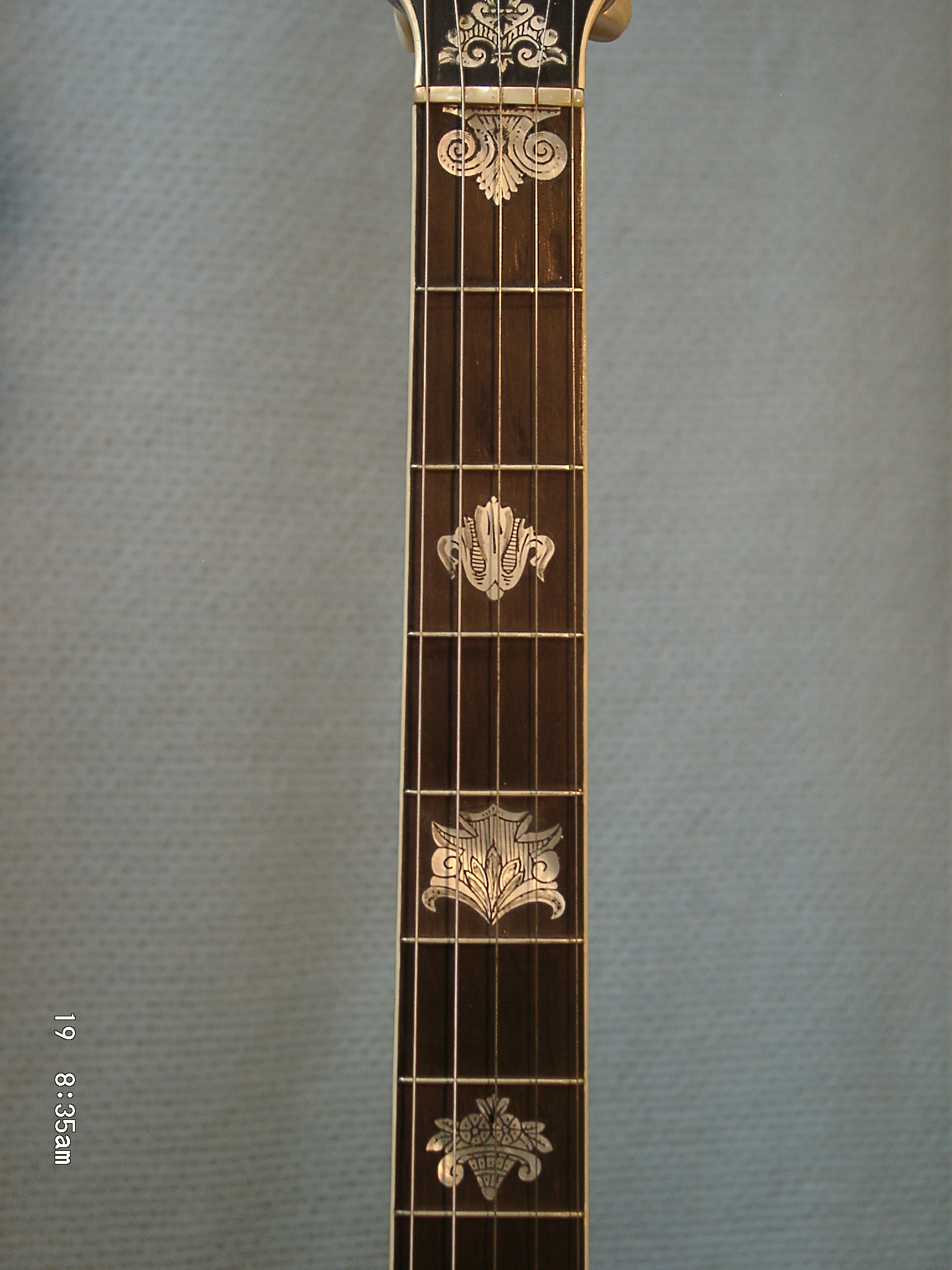
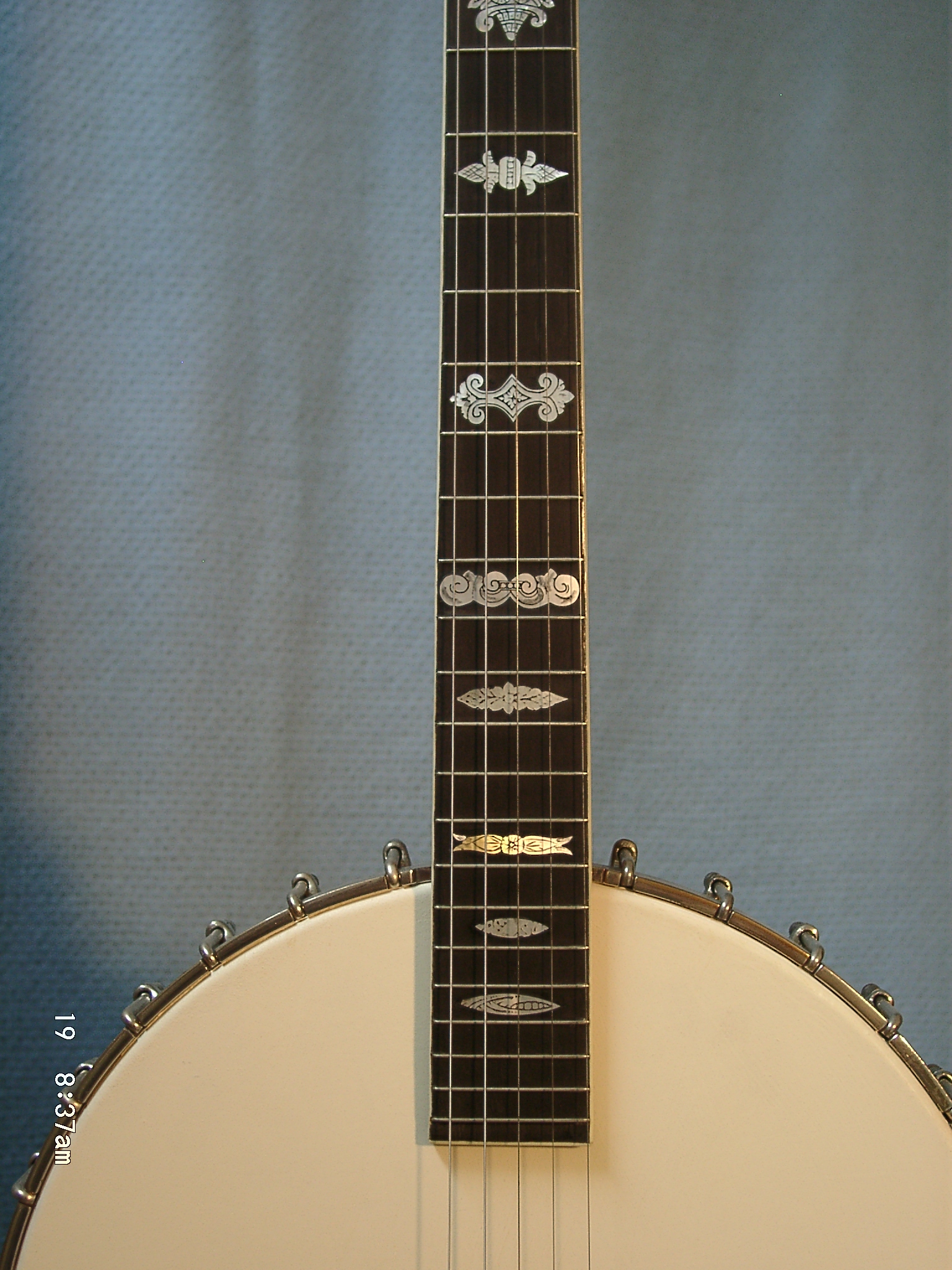
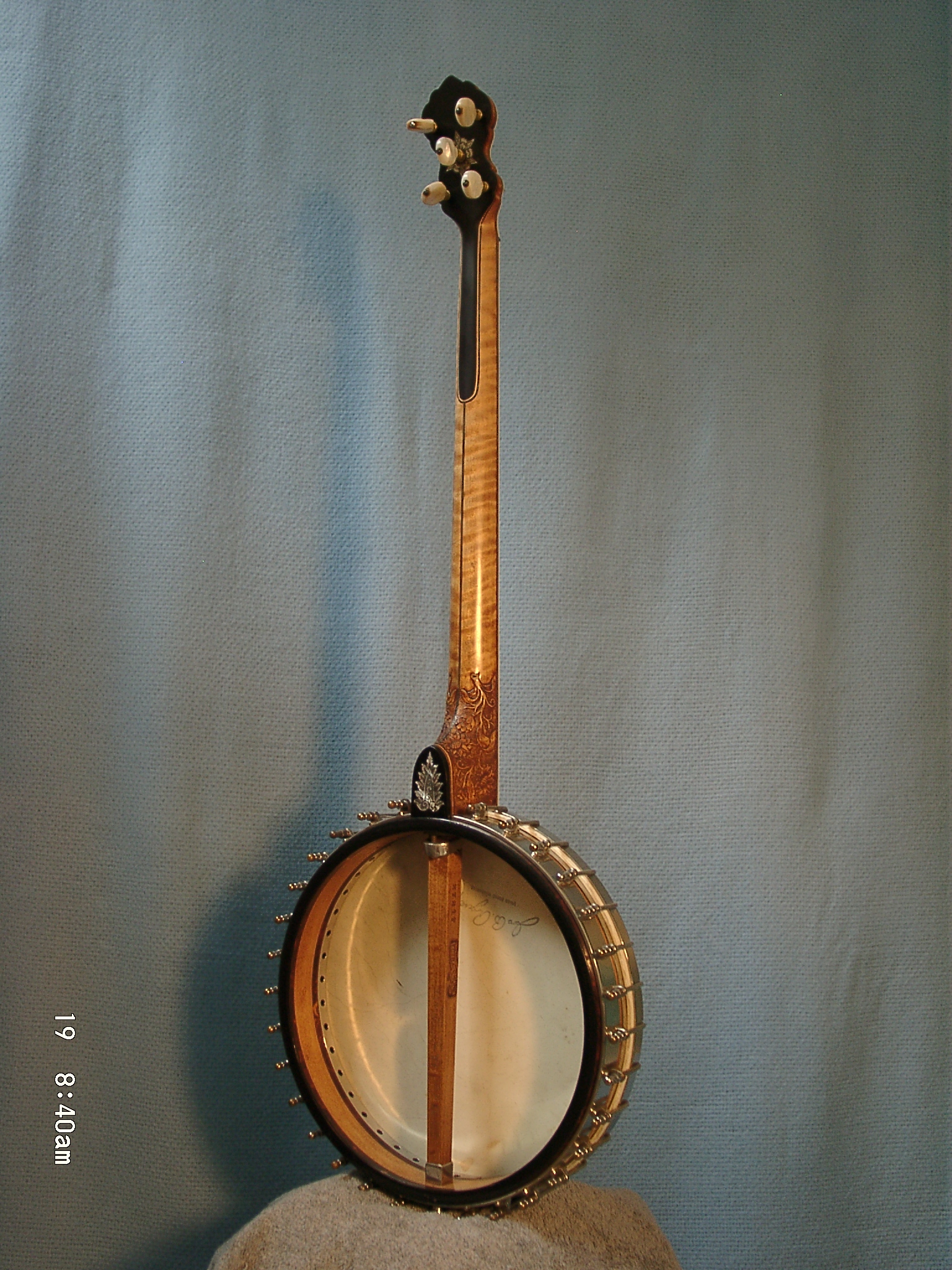
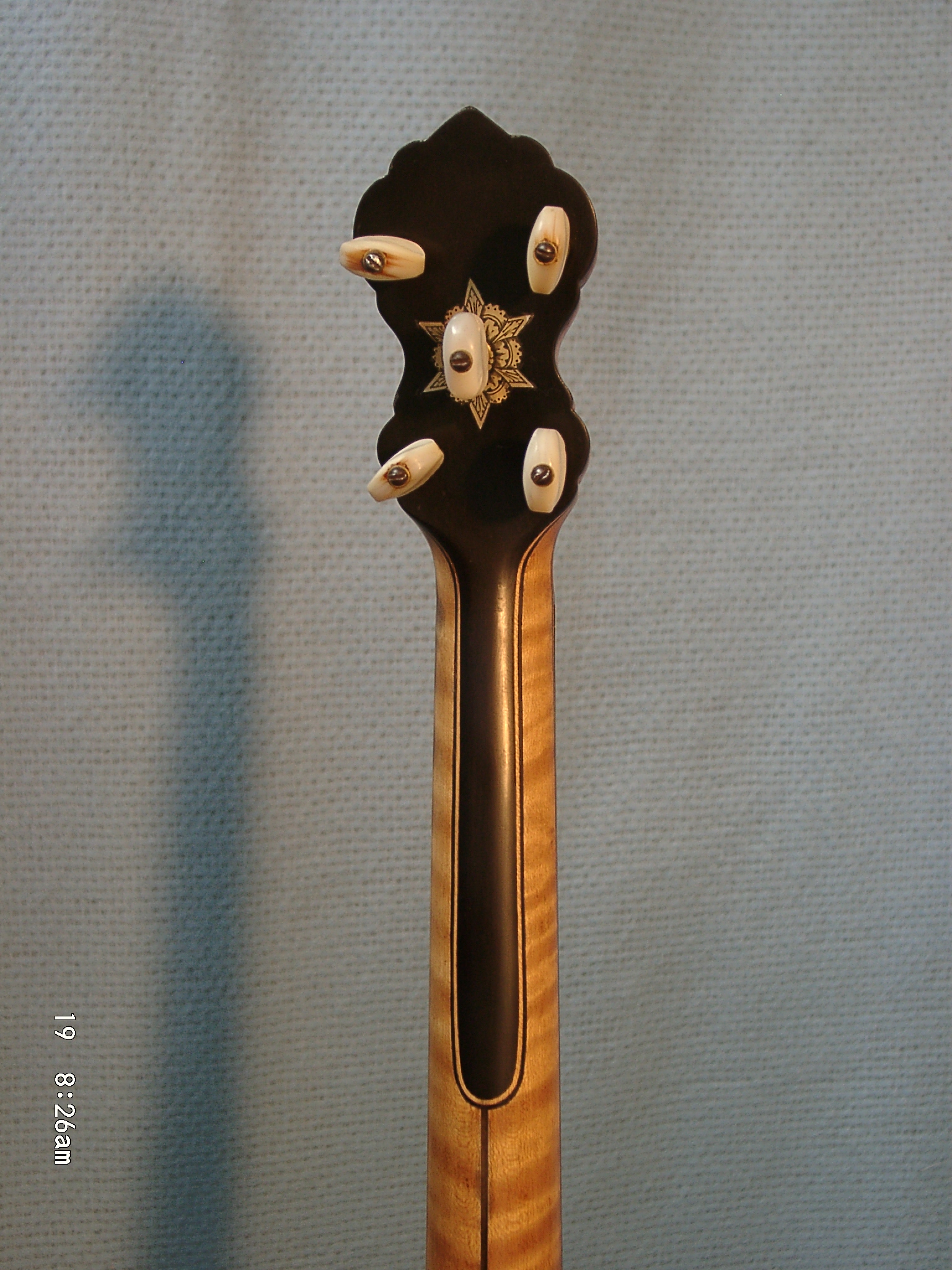
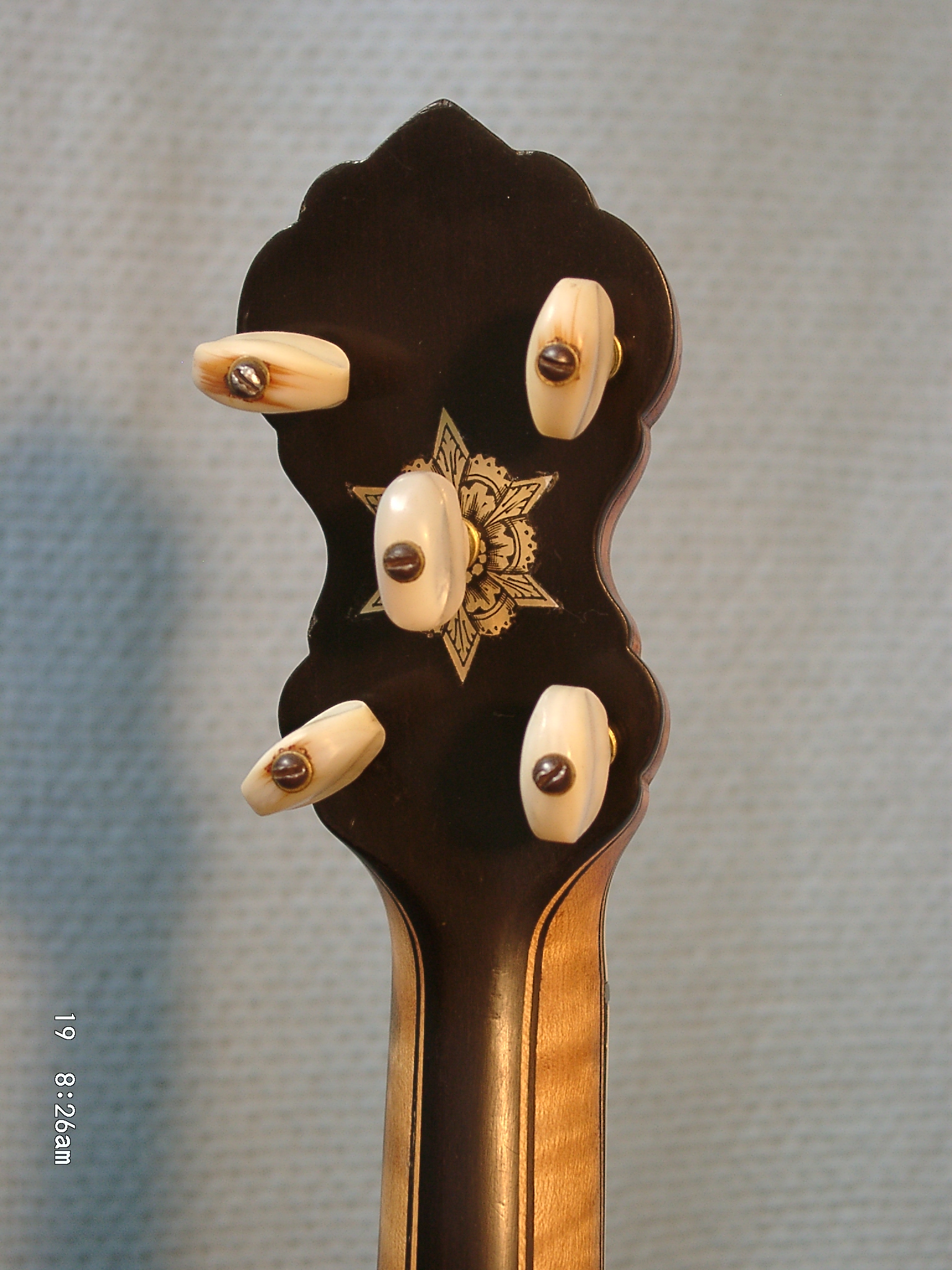



WS16-6
Fairbanks (by Vega) Custom Tubaphone “No.
9" 5 String Plectrum
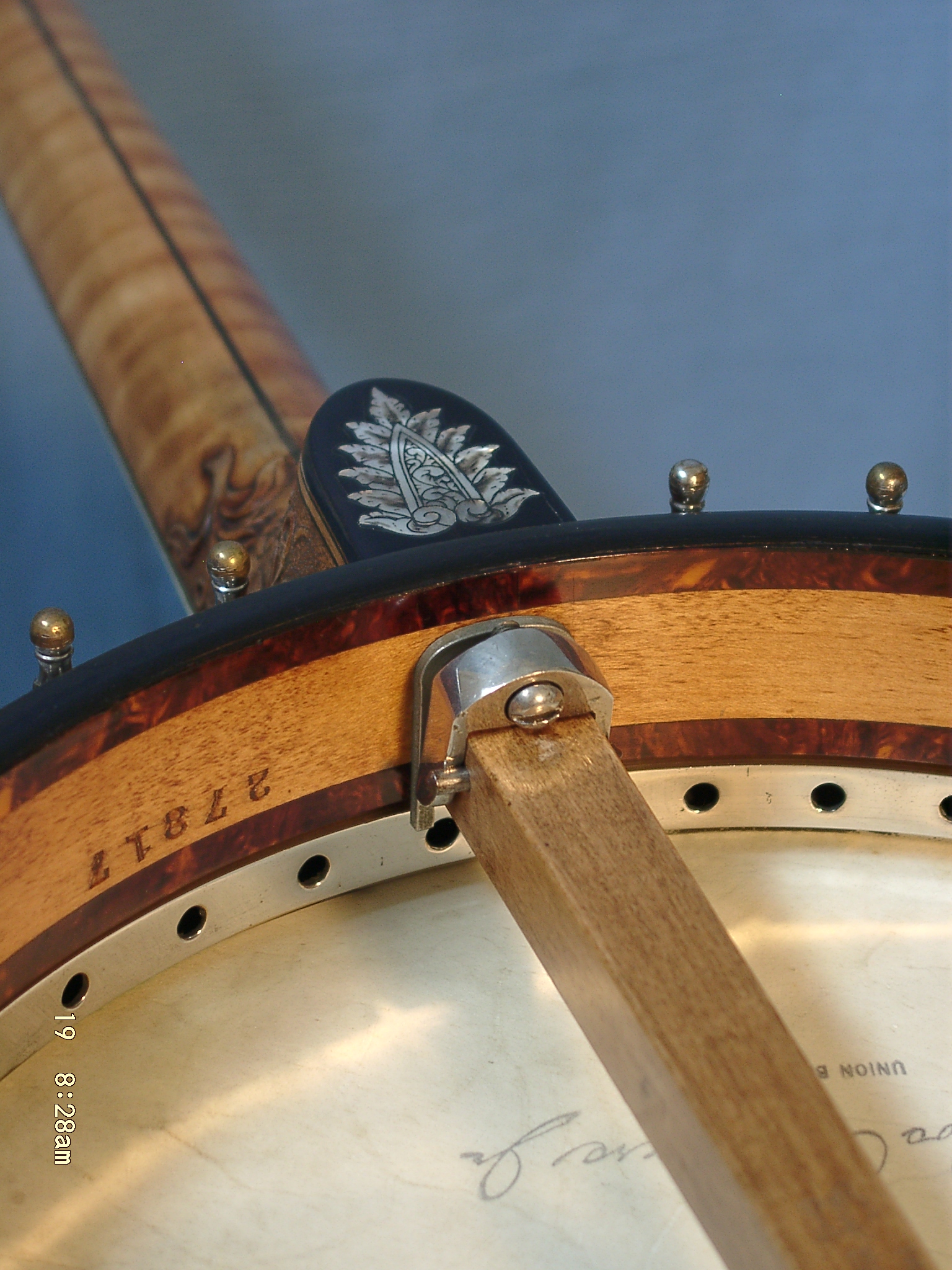
S/N- 27817 1911 12 1/4 x 28"
8 1/4 lb.
Originality and Condition-
This rather pivotal and fascinating piece of banjo history had suffered many
neglects and insults and definitely deserved to be professionally restored to a
respectable condition and state of
originality. None of the problems was serious. It had been robbed of several
parts and had a few inlays replaced by someone who evidently never looked at
those still present. I would classify it now as
fairly original and very good - excellent condition.
Background: Most banjo fans, players, or collectors likely have never heard of a 5 string plectrum banjo. Indeed, the term sounds like an oxymoron. To learn about the origin and development of this short-lived version of the banjo, go to my "Group of Fairbanks Banjos By Vega" and click on "Information for this group" and read Part B. (The other 5 string plectrum in this collection is S/N 59331 in the following group.)
The specific instrument discussed on this page relates to so many aspects of
banjo collecting and history that it could easily serve as the topic for a P. H.
D. thesis. Some viewers might even wonder if I had that in mind as I included
all this information. If this exceeds what you care to know, just pick and
choose. To decrease length and allow you to choose what to read or skip, I have
divided this info. into several categories.
A) Personal bias-
Although I collect and play vintage 5 string banjos, my favorite listening is
to the skilled players of 4
string banjos, especially plectrums. Thus I am naturally more interested in 5 string plectrums than the
average collector.
B) 4 String banjos and
playing with a flat pick and the significance of Brent Hayes- Refer to Part B of the information
about the group of Fairbanks banjos made by Vega.
C) Construction of
5-string plectrums- Jim Bollman has seen about 6 of these 5 string plectrum
banjos. Two were made like Tuba. No. 3 models and the others were made like
Tuba. No. 9 models. In addition, this collection includes the only known Tuba.
DeLuxe example( S/N- 59331). This banjo is stamped “ No. 9" on the dowel
stick but nothing is like a No. 9. The pot is like a standard No. 3 pot and the
neck is basically a custom DeLuxe neck.
D) Inlays on DeLuxe models-
So few examples have surfaced and nearly all of them date from the 1920s that
most of us who have seen a few tend to think we know what the board inlays look
like. However, we have had few or no
opportunities to see a DeLuxe from the first few years they were made. Also,
the cuts in the Vega catalog of circa 1912 do not make it easy to notice fine
details. A careful check of those on the DeLuxe , however, reveal them to have
been completely different when the model was introduced. Specifically, it is
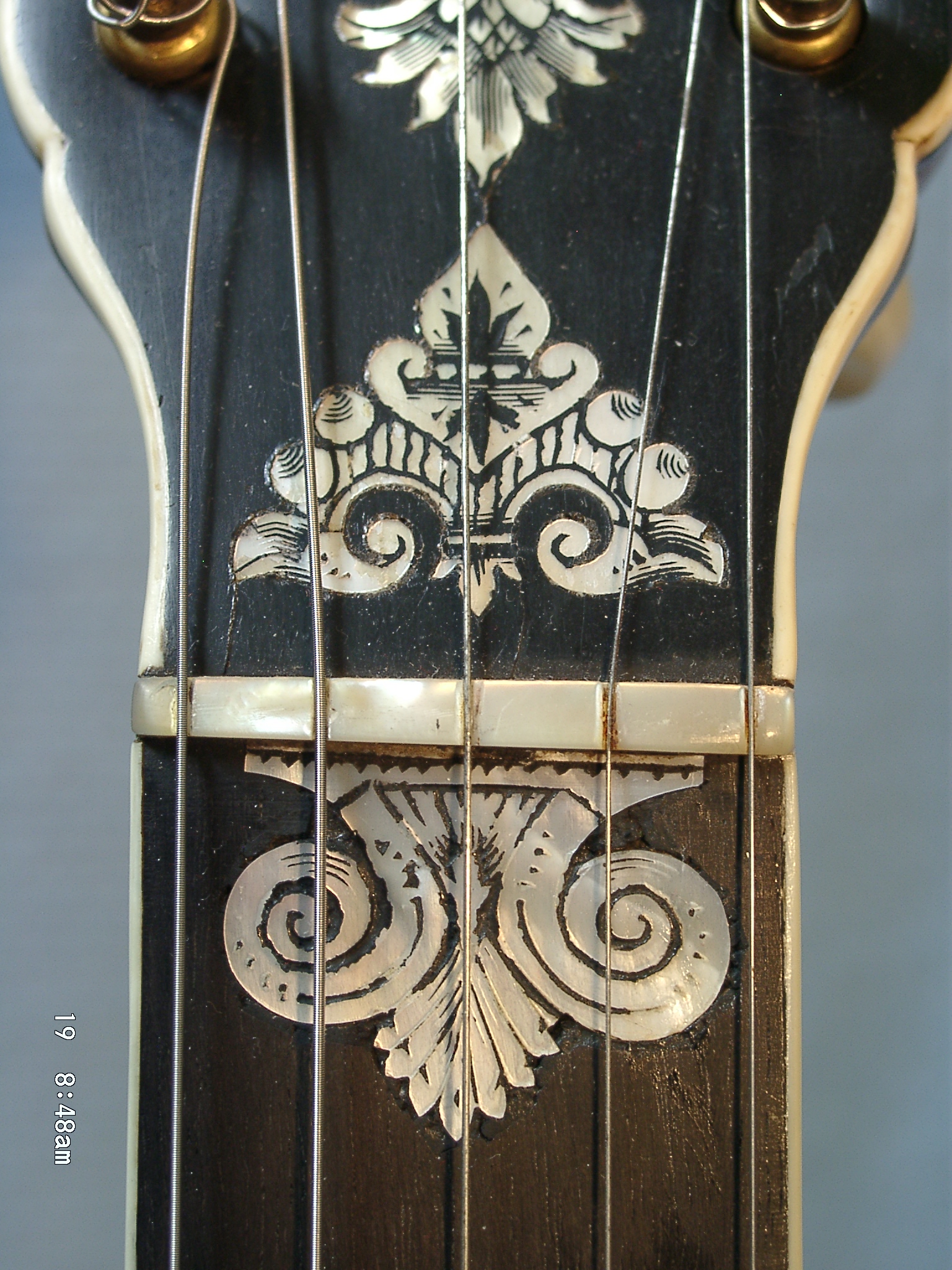
easy to discern a double ram’s horn in the first fret.
About this instrument:
1) Almost surely unique.
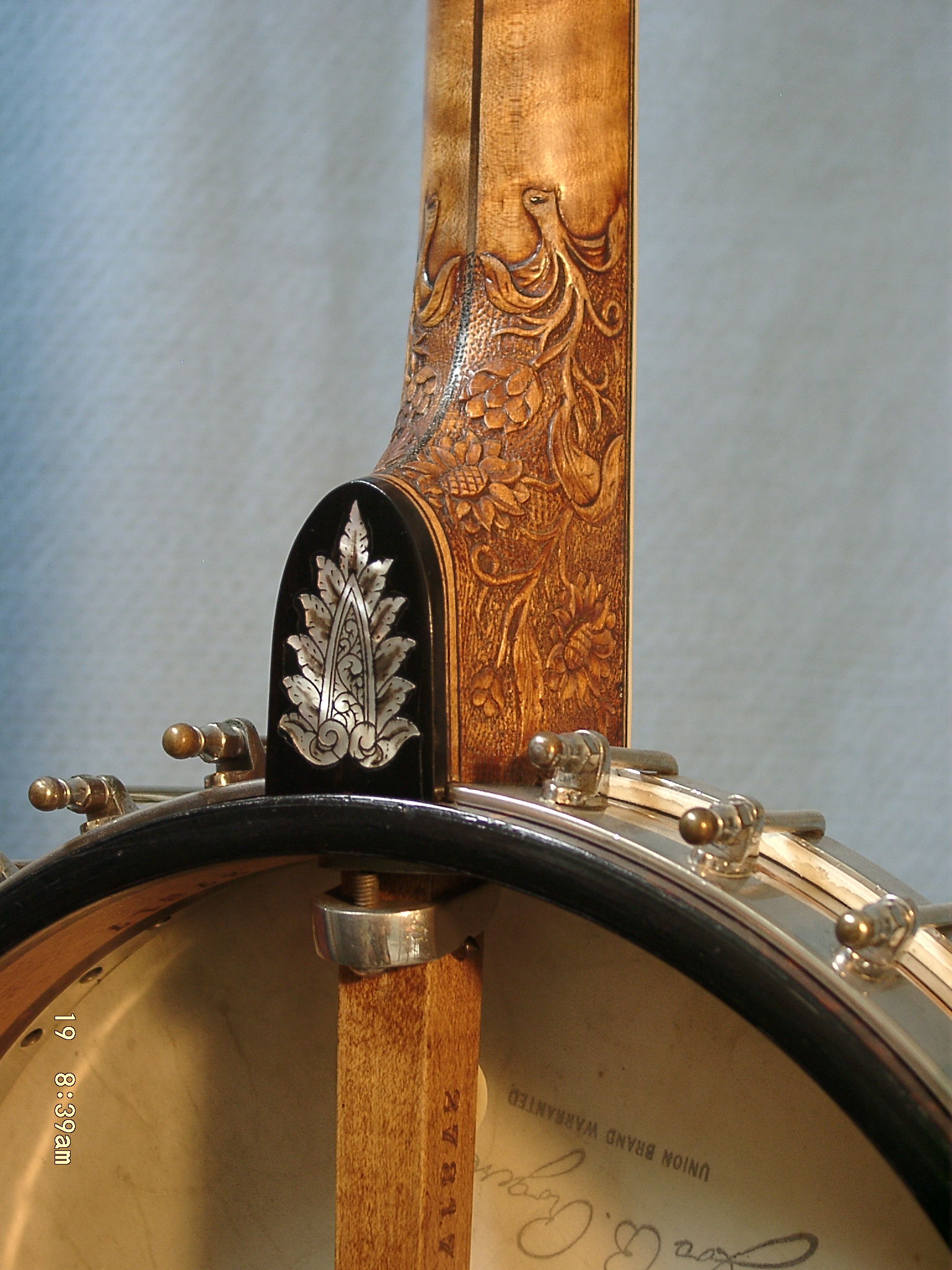
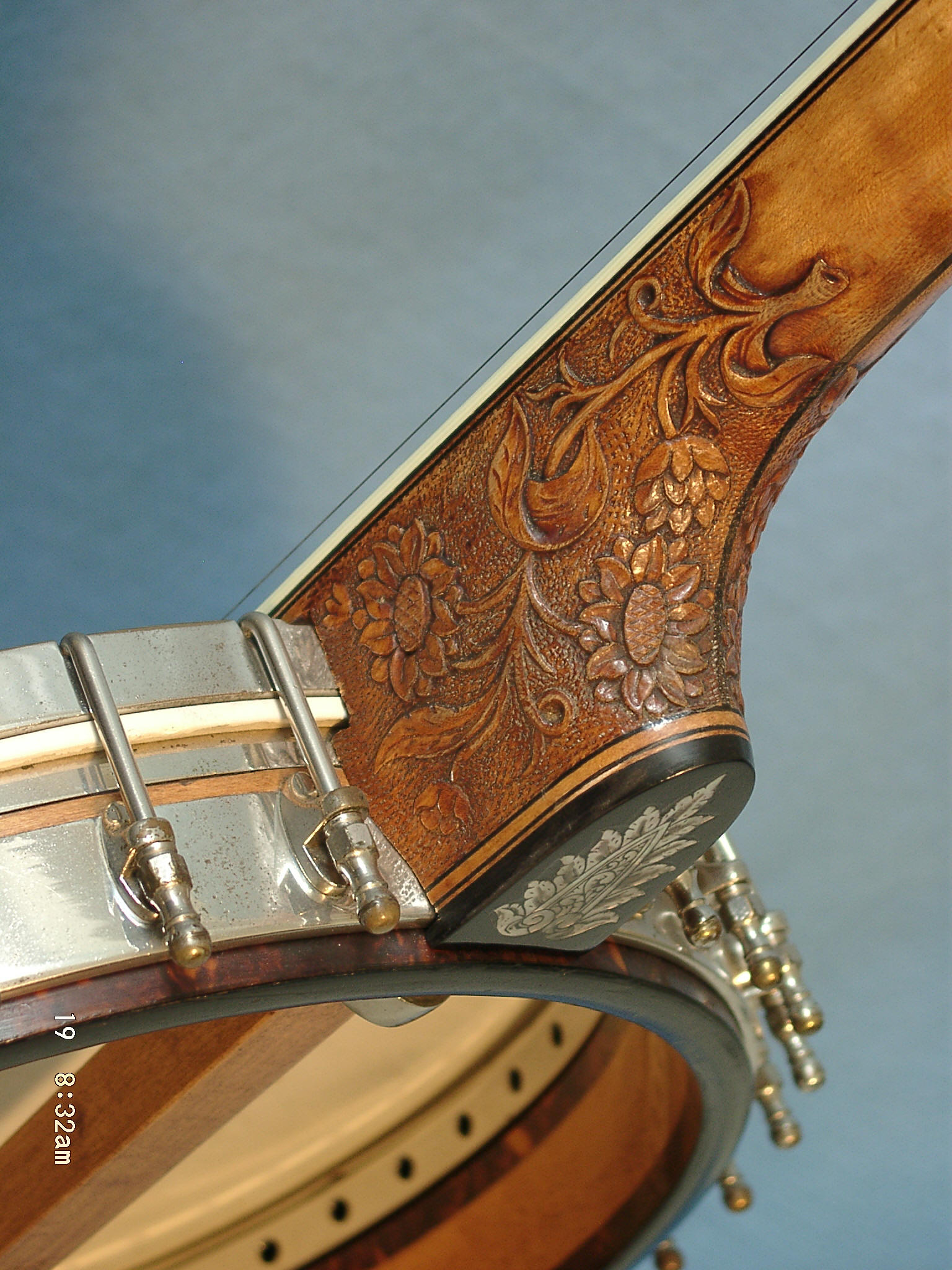
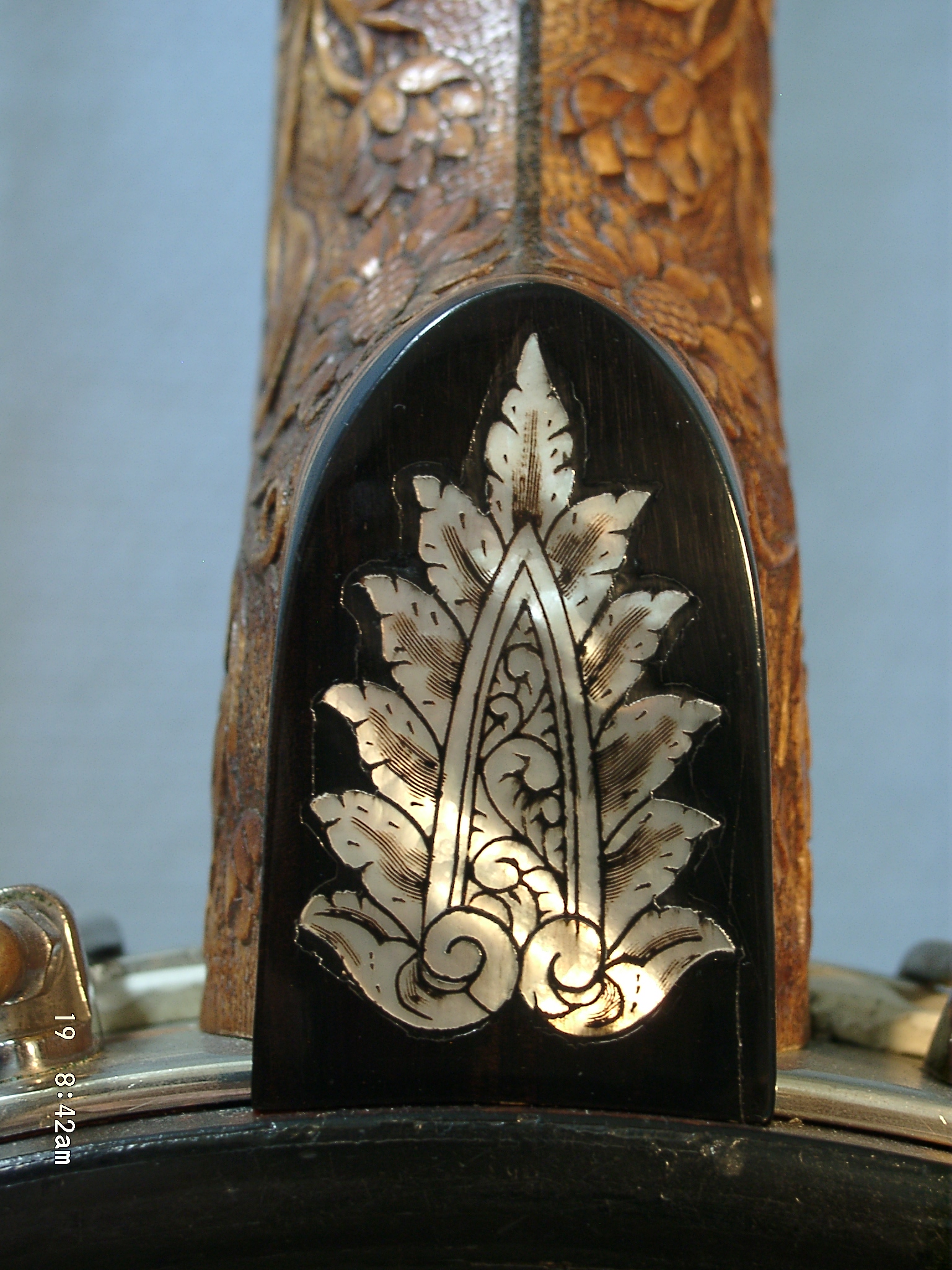
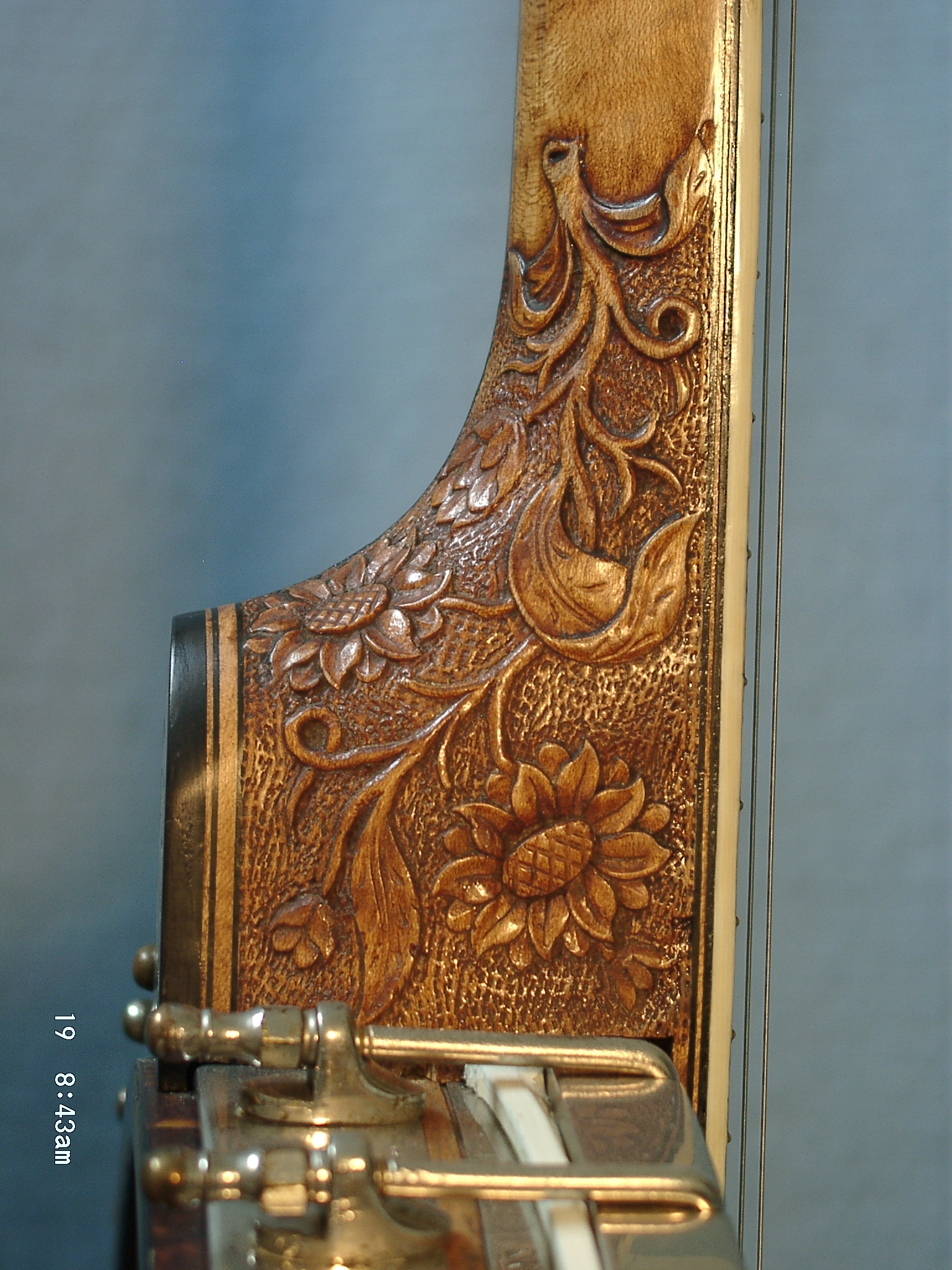
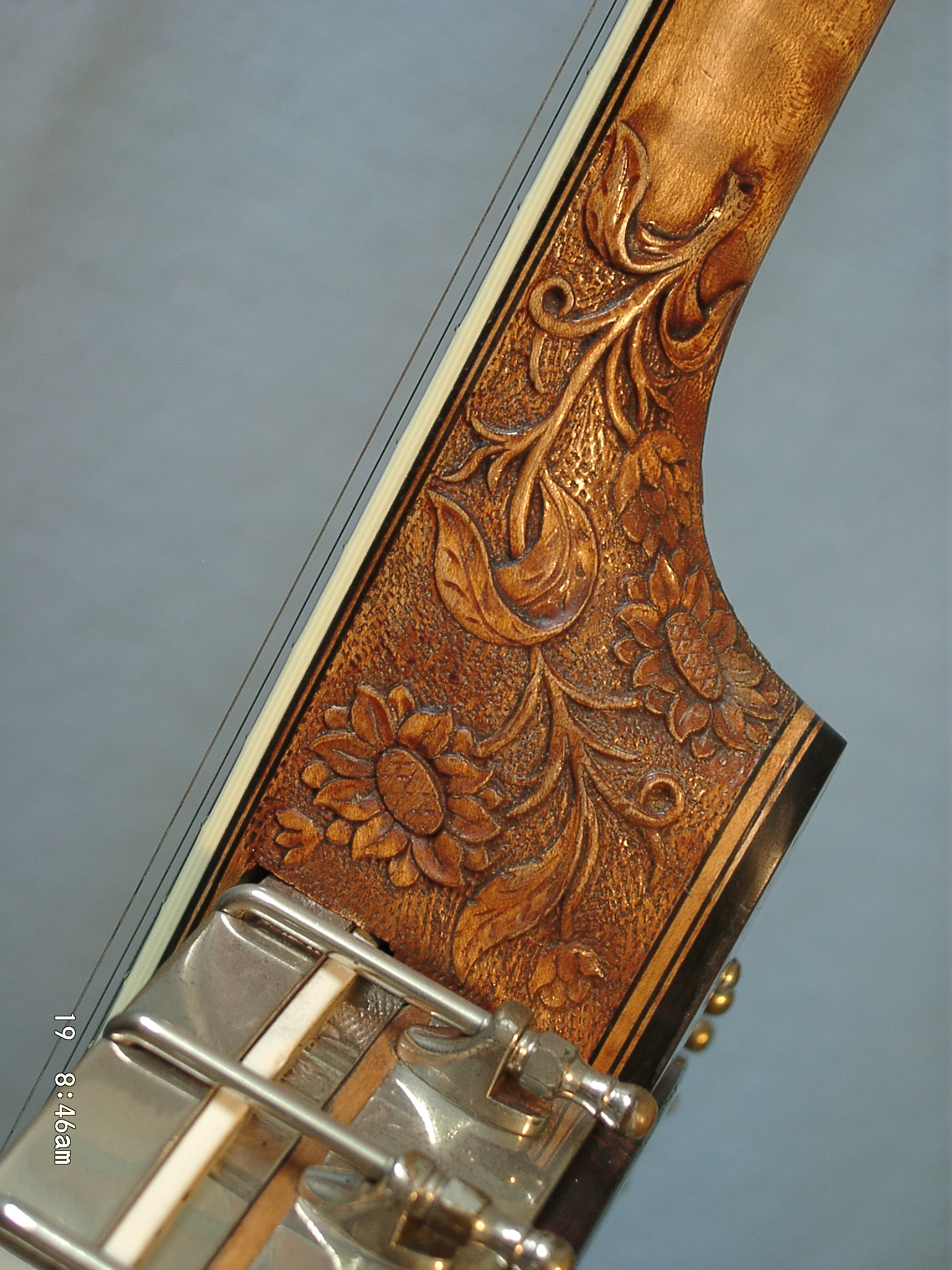
2) The carved heel pattern is
known to appear on only one other banjo and is incredibly lovely.
3) The board inlays are
examples of the extremely rarely seen designs present on the DeLuxe when it was
first issued ( and illustrated in the circa 1912 catalog).
4) The No. 9 name is really a
misnomer. Although that is stamped on the dowel stick, the pot is like a No. 3
and the neck is like a DeLuxe with a custom carving.
5) Extended fingerboard.
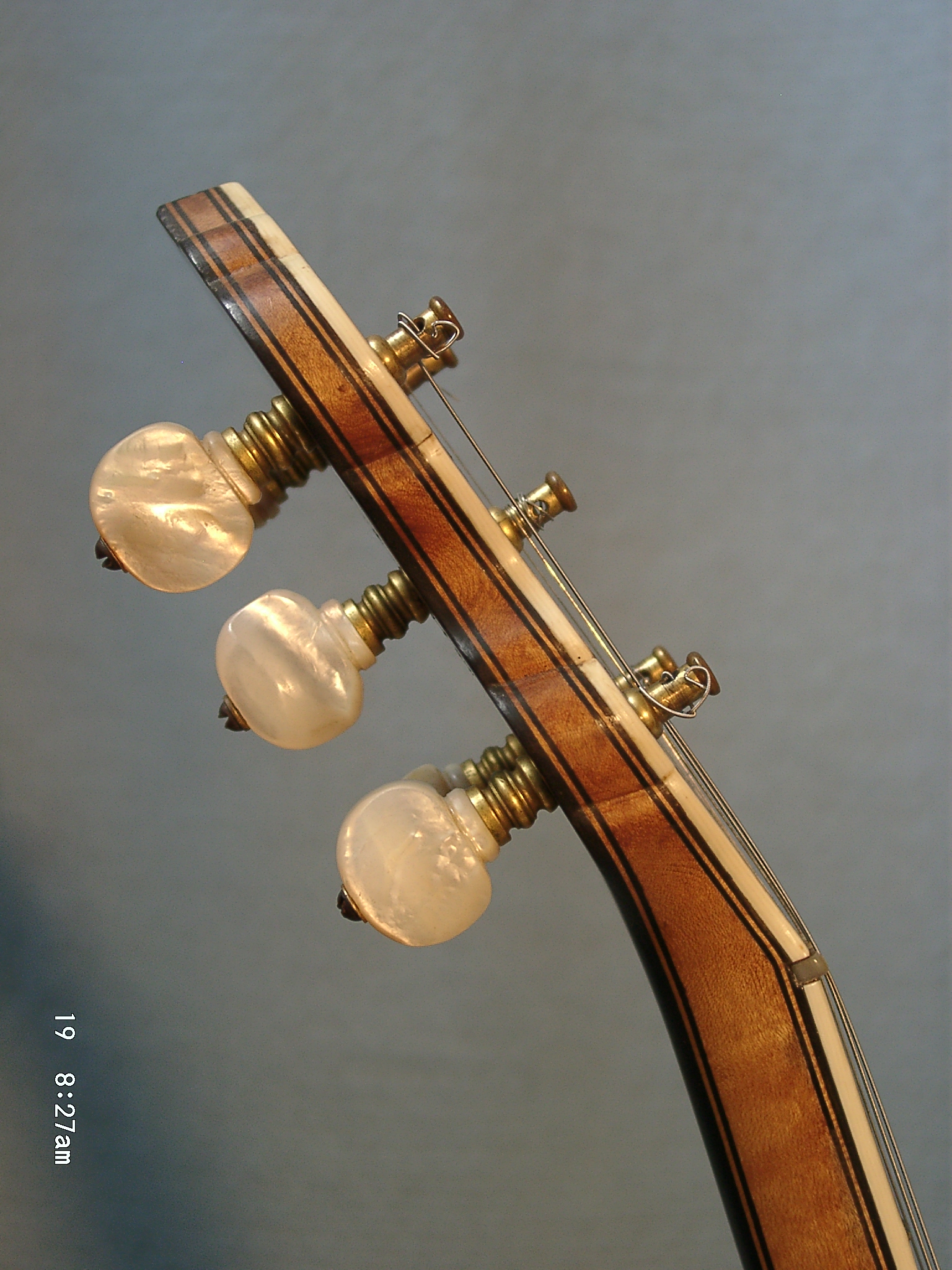
6) The string nut is
mother-of-pearl.
7) Because of its 1911 date
and relationship to similar instruments played by Brent Hayes, possibly an
important nugget of banjo history.
Click to enlarge: