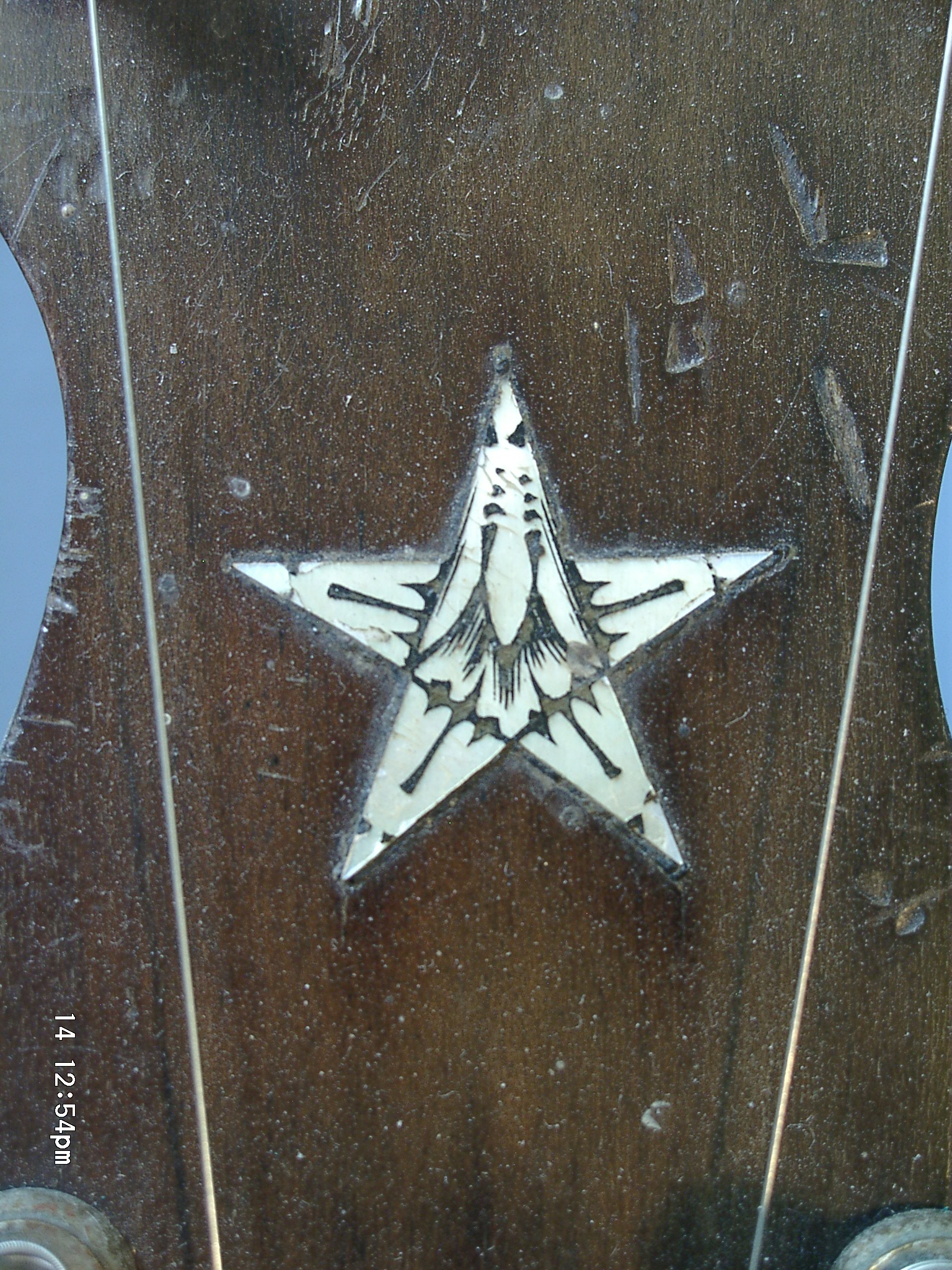
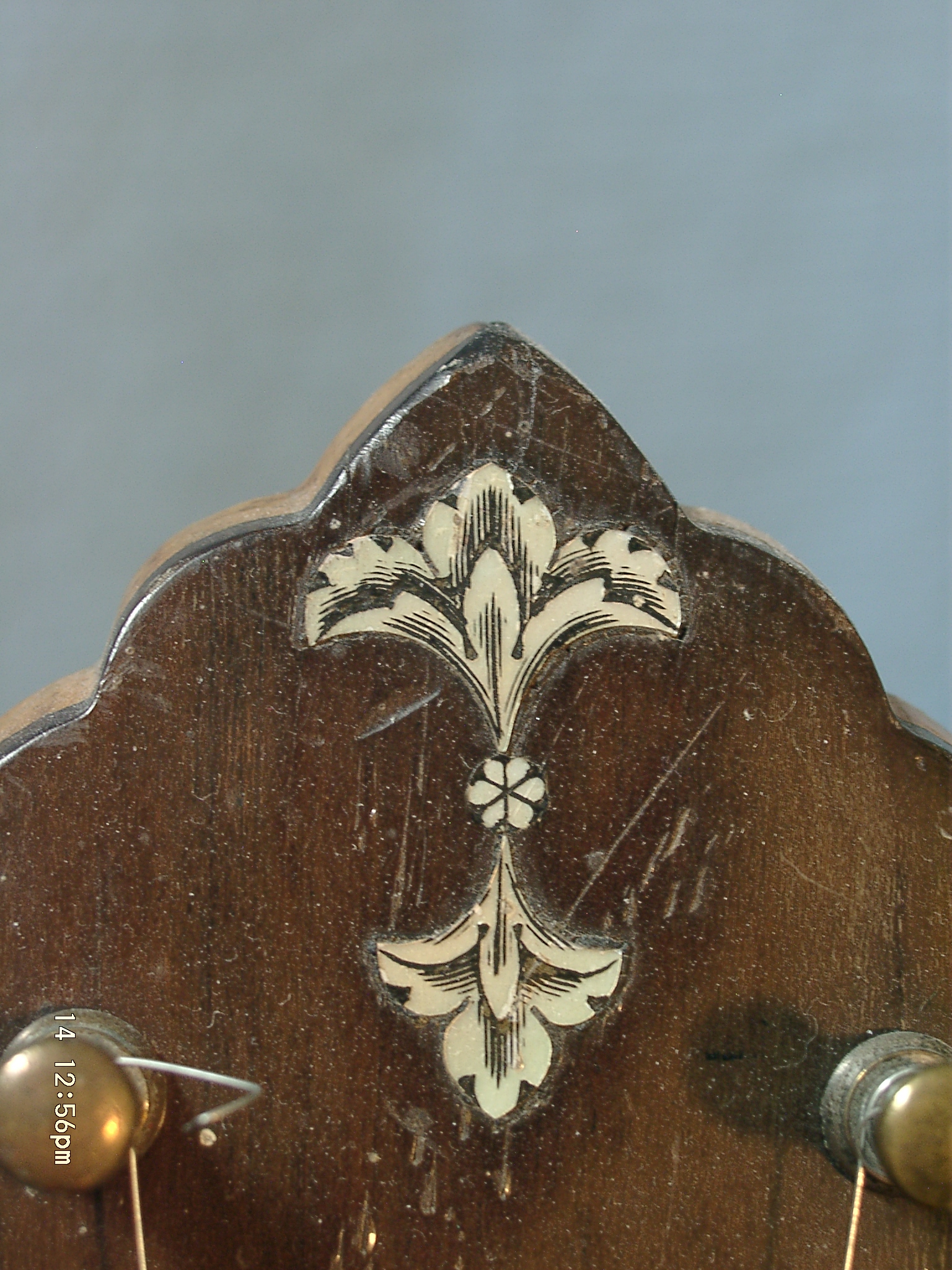
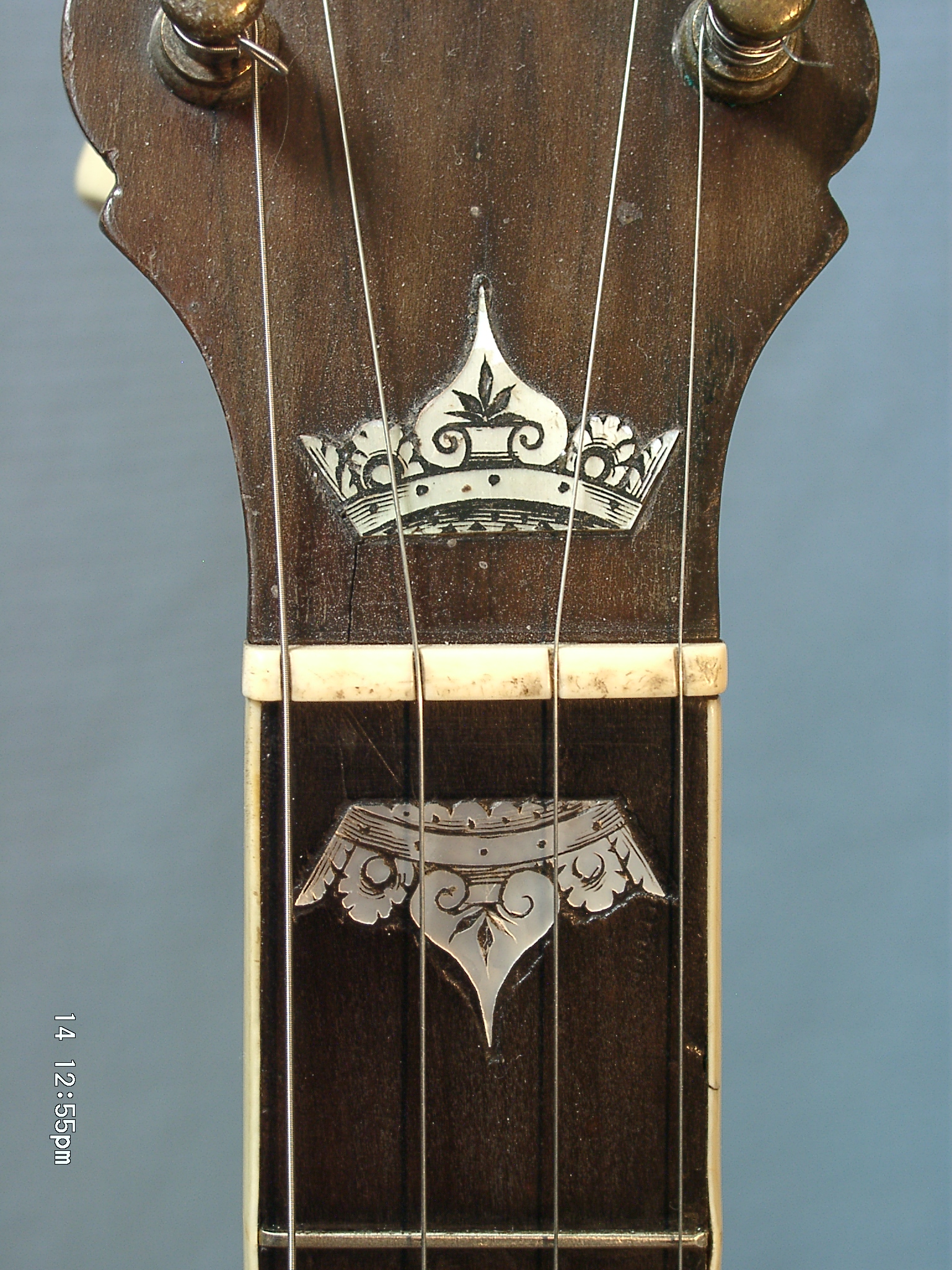
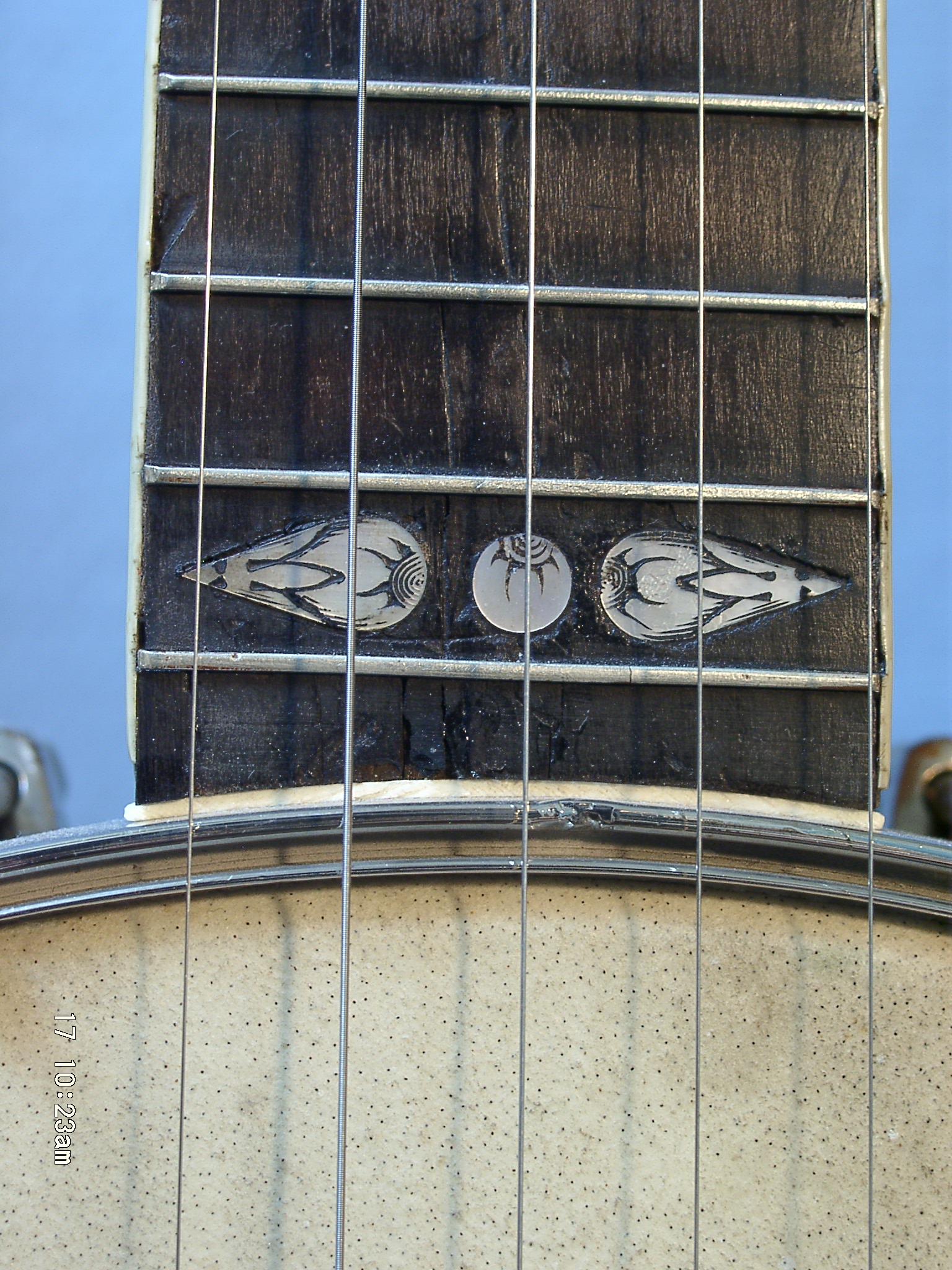
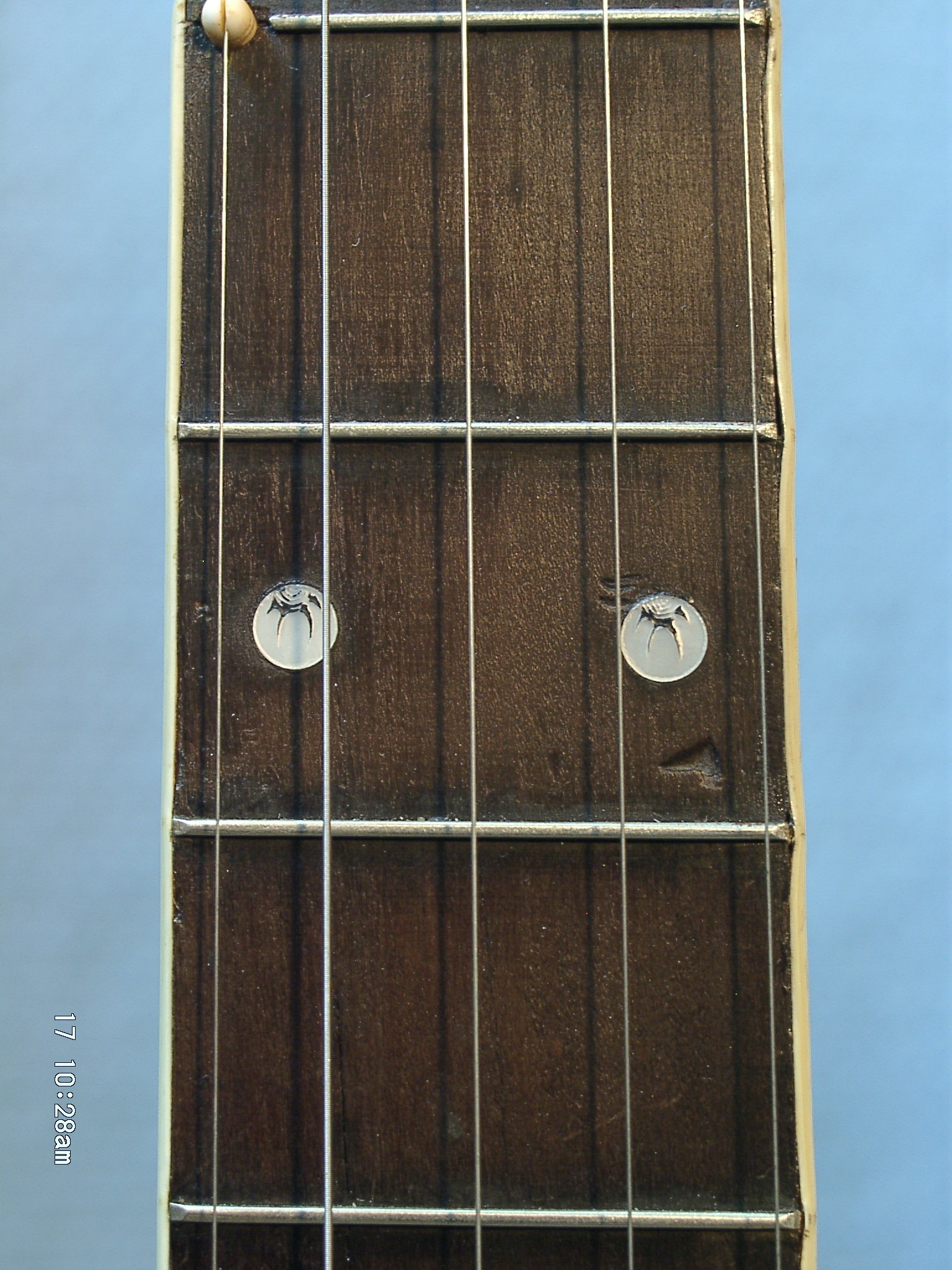
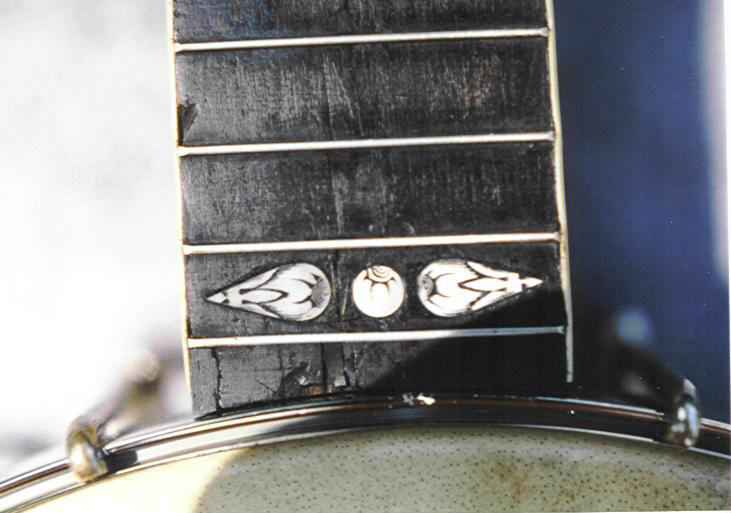
4) Unusual and superbly done
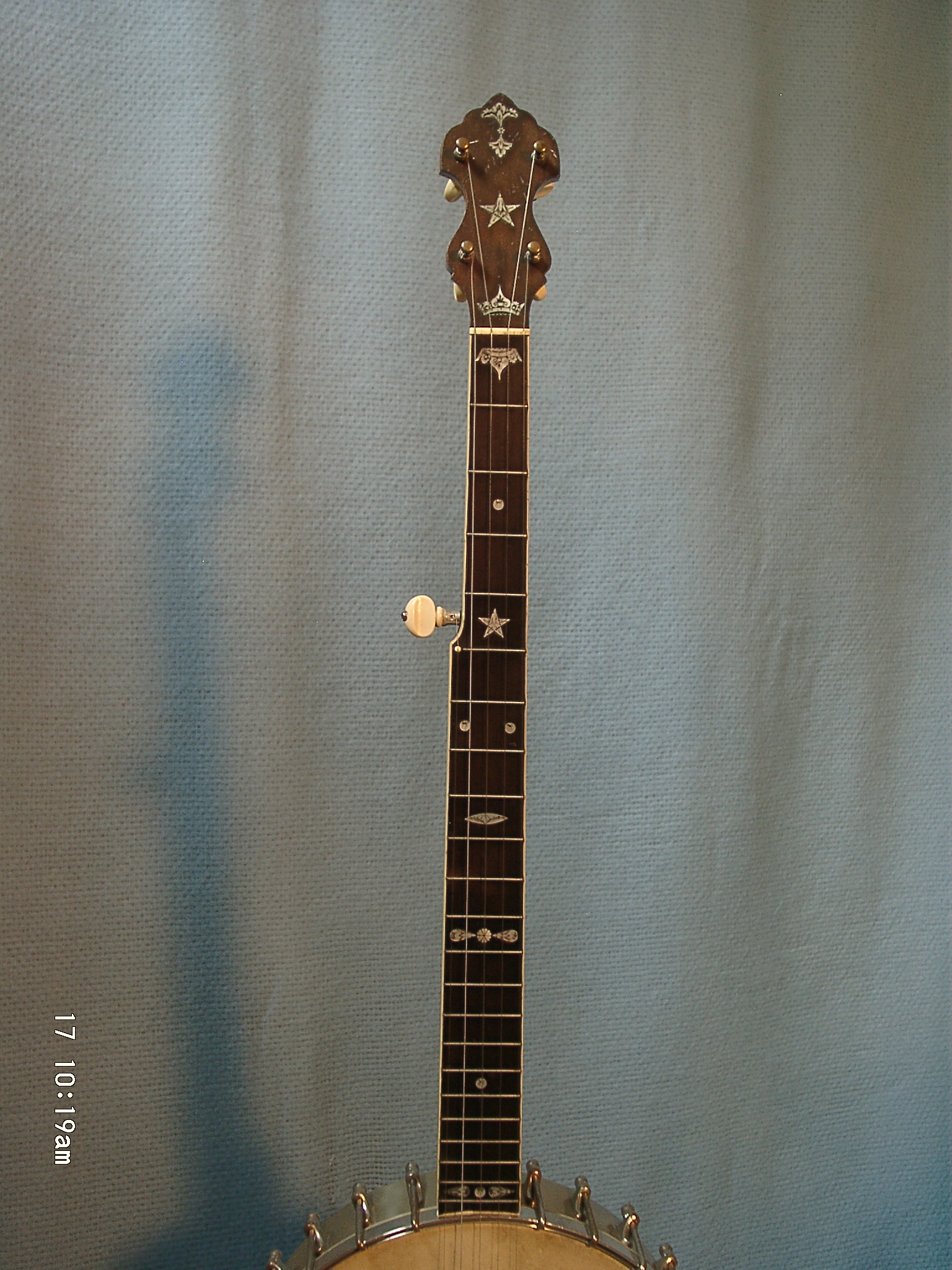
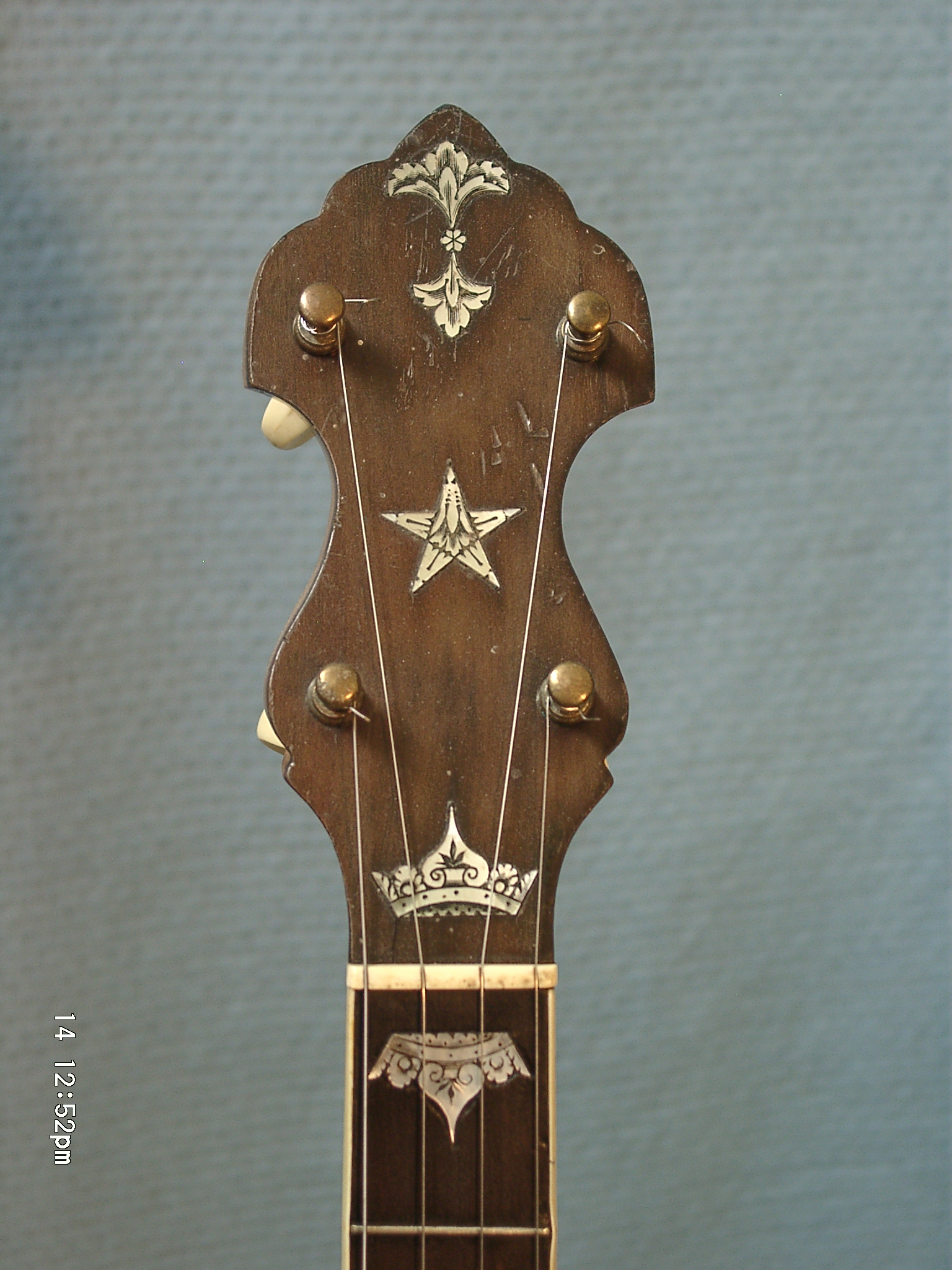
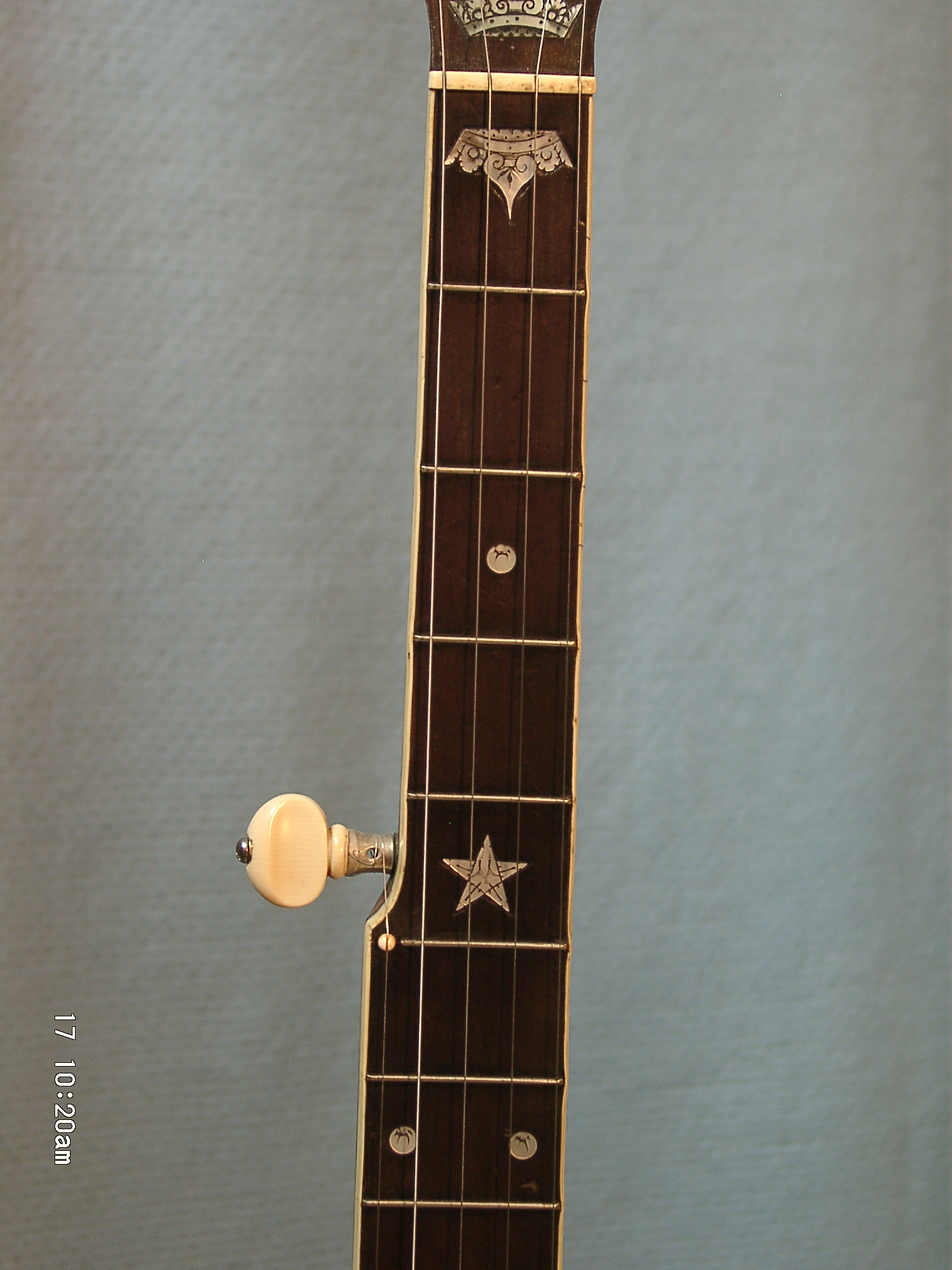
inlay pattern highlighted by stars on the peghead and 5th fret that
are engraved in a very artistic manner.
Click to enlarge:
WS17-1
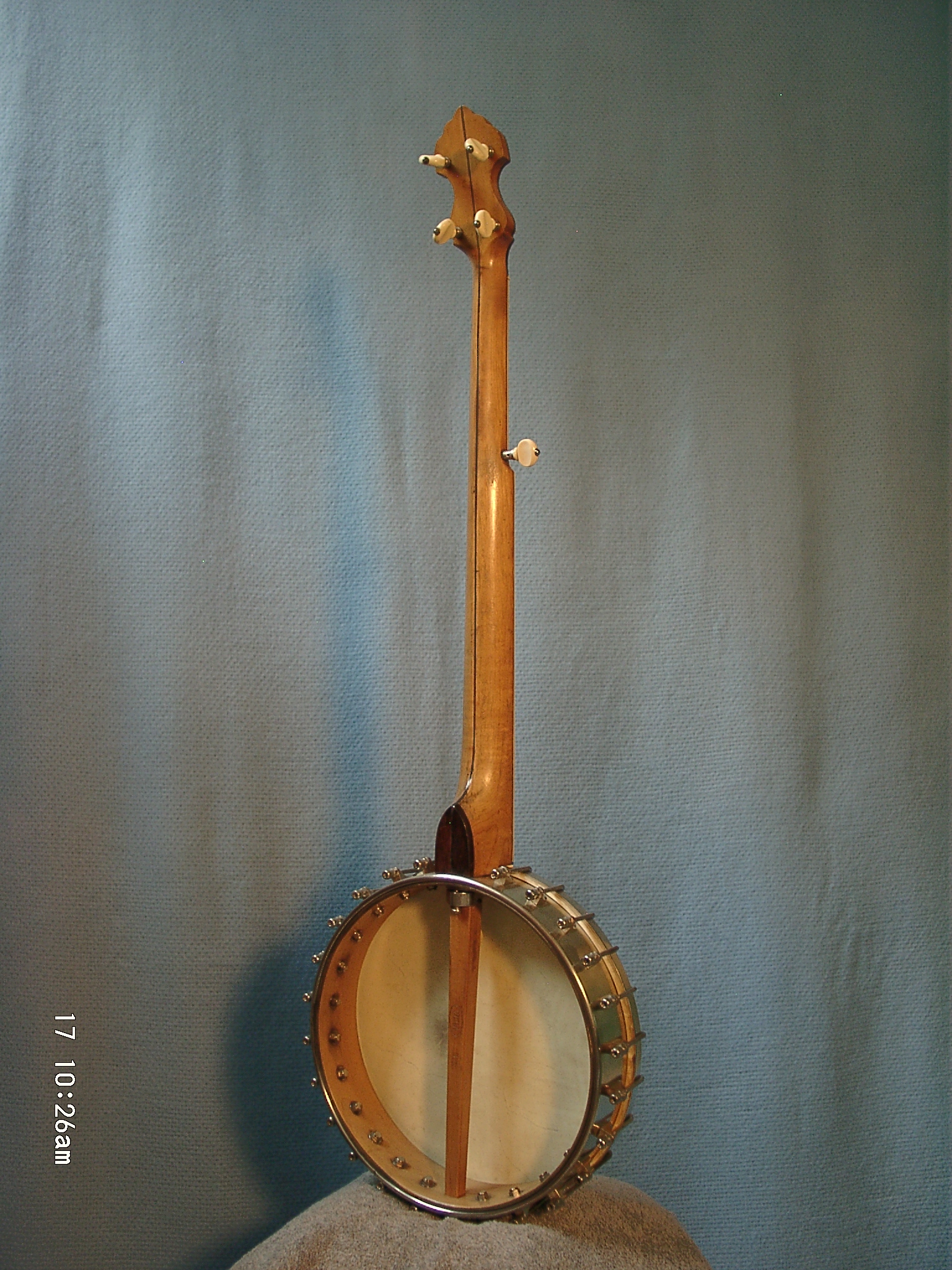
Vega “ Regent Variant” 5
String
S/N: 22944 1904 10 3/4 x 26" 5 1/4 lb.
Originality and Condition:
Lacking knowledge to the contrary, an experienced collector viewing this banjo
for the first time might easily say something like, “Boy, that’s an interesting
original old Vega but it surely was played long and hard at outdoor festivals”.
My reason for discussing originality and condition simultaneously will become
obvious. This banjo was reportedly found in a barrel under a leaking roof and looked
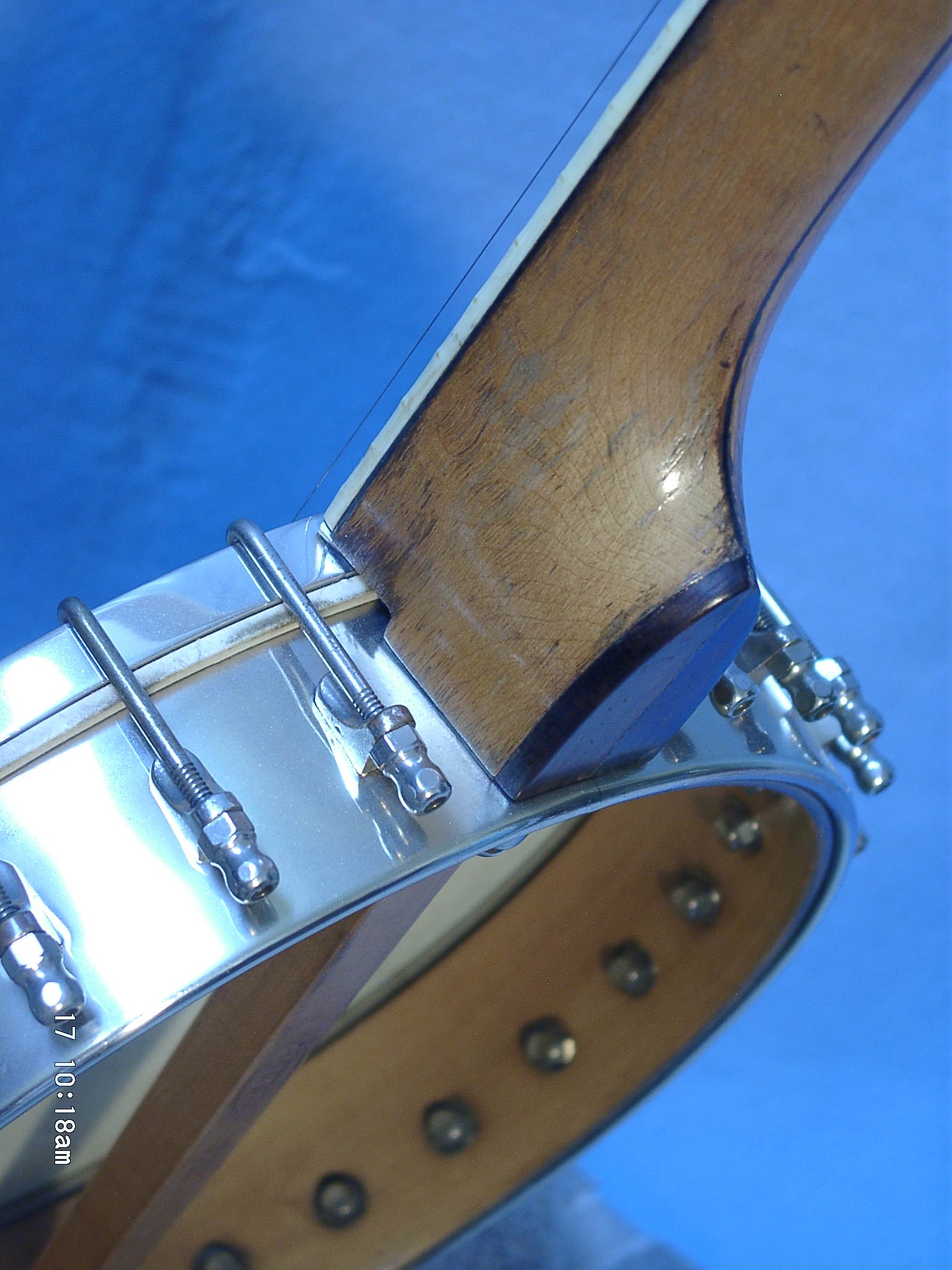
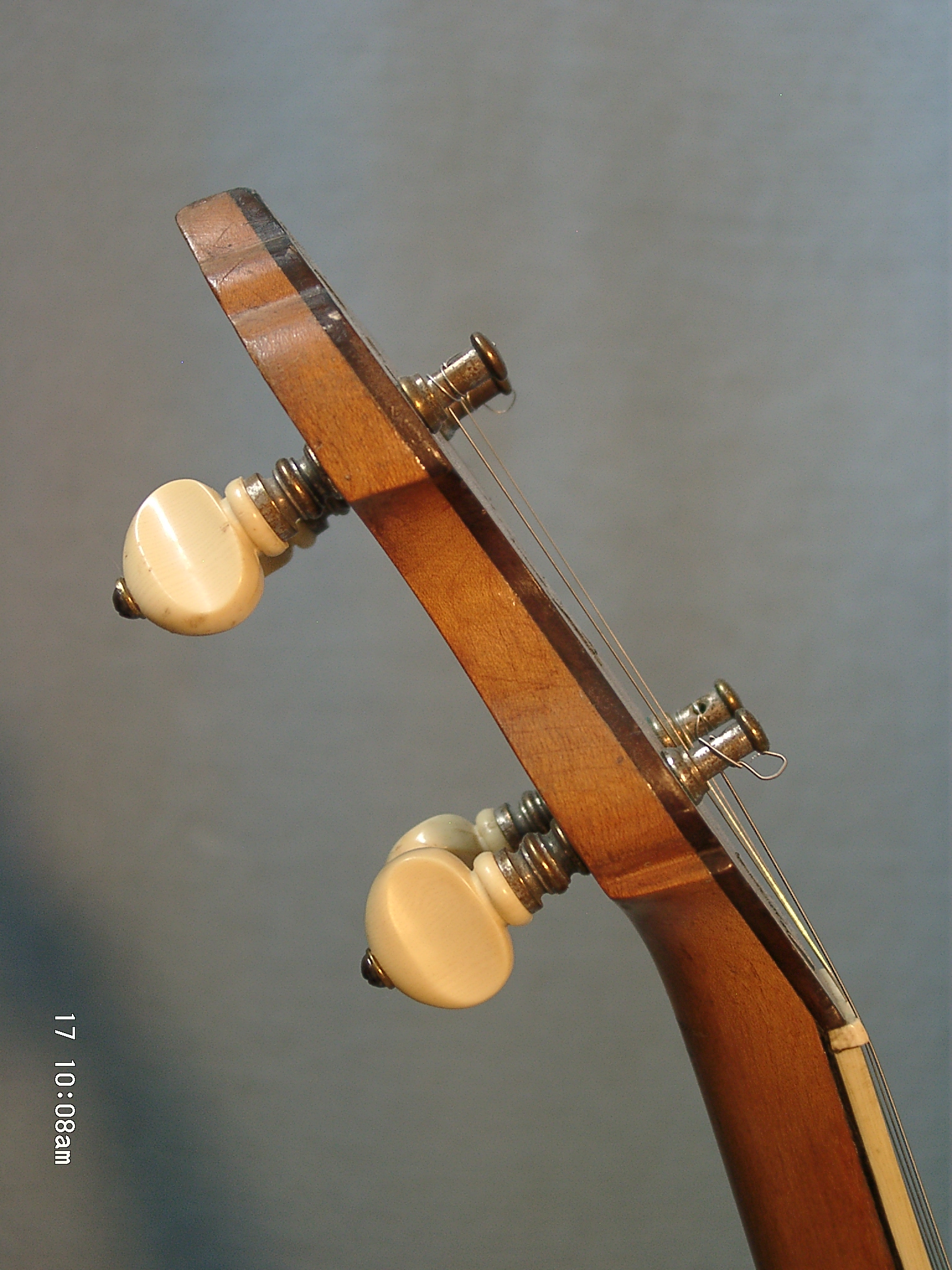
the part. Thankfully, a dealer recognized it was unusual. The 3-piece neck had
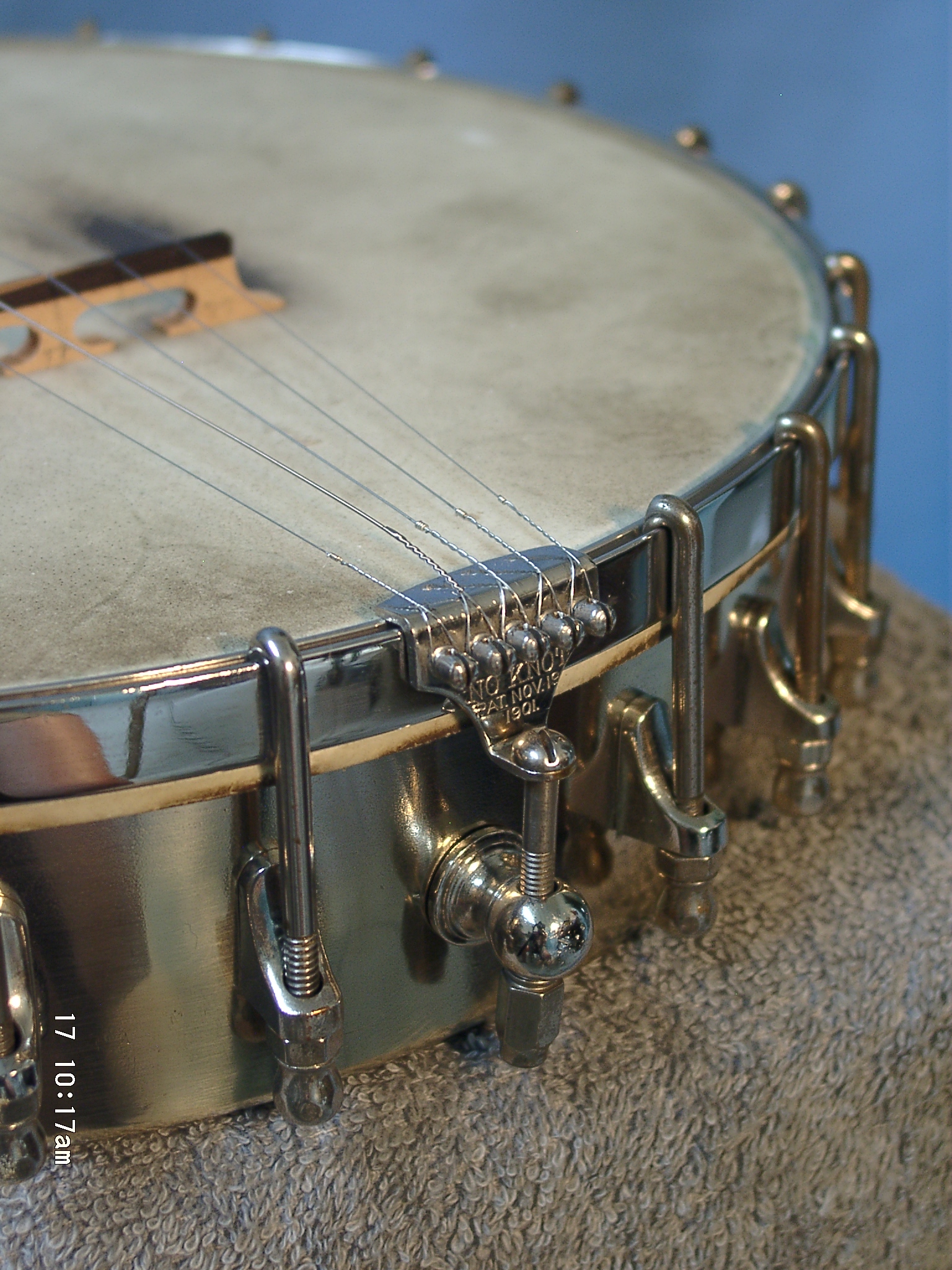
delaminated and although all the neck binding was present, it was 99 %
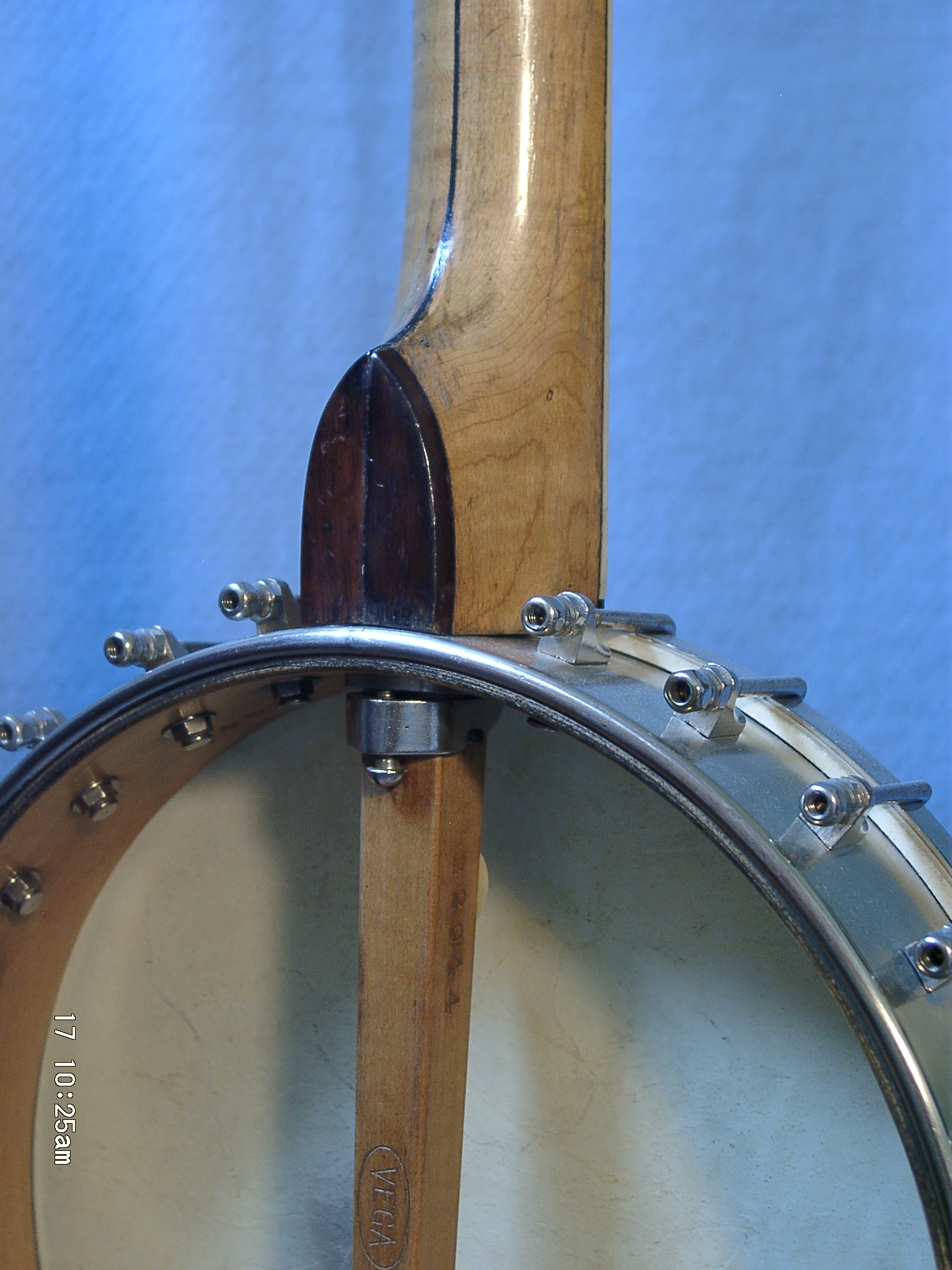
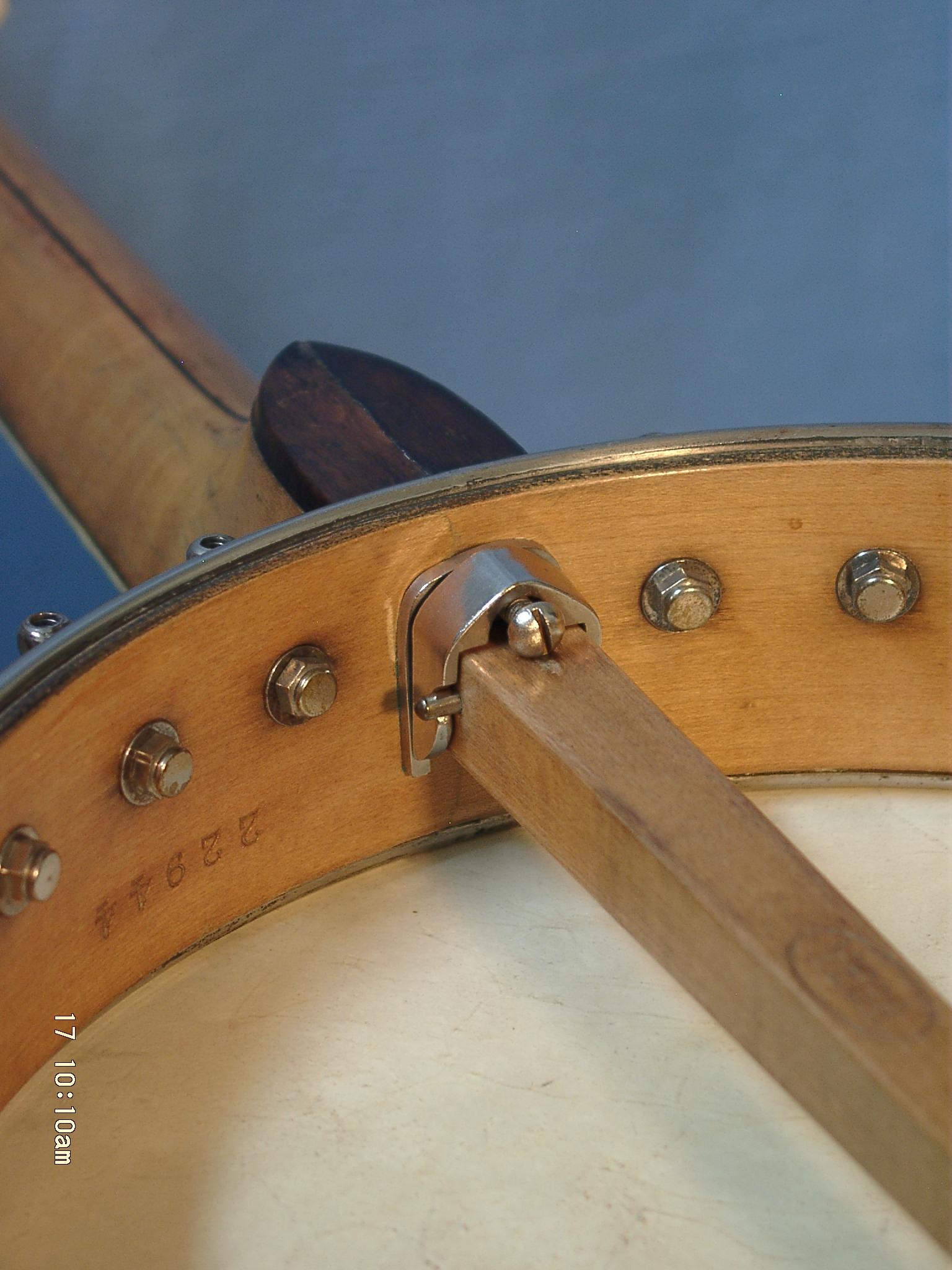
detached. The dowel stick had fallen out and half of the heel cap was gone. All
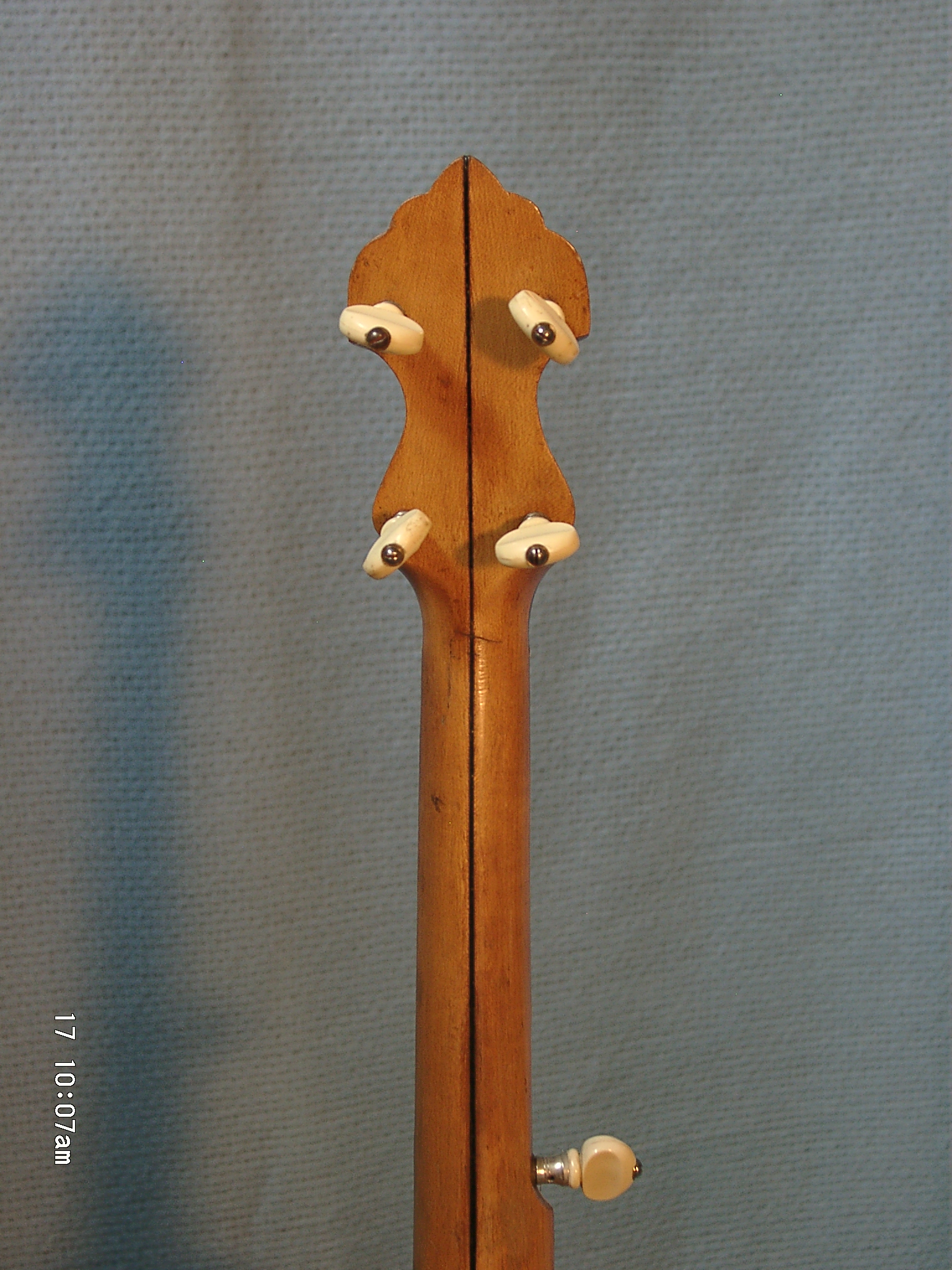
the metal parts were heavily corroded. The peghead inlays were present but
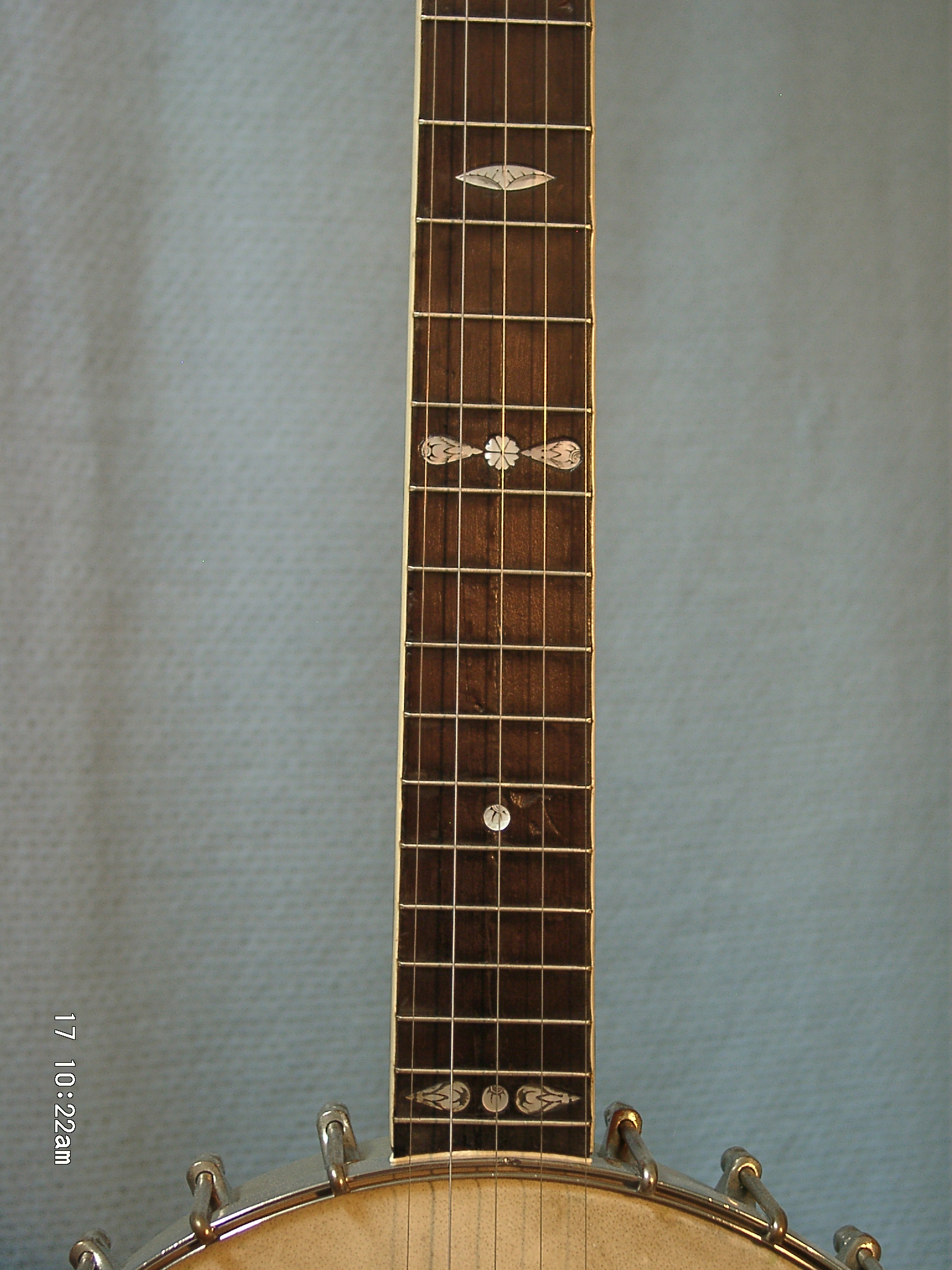
almost exactly half of the board inlays were gone. Because the engravings were
so well done and so unusual, I am not joking when I say I believe God put his
“fingers” on what remained to save them for us to enjoy. For every missing
inlay, we had a matching example to show how they should be engraved. Several
fellow collectors were helpful in the mammoth restoration project but chief
plaudits go to T. J. Thompson who managed to preserve its authentic appearance.
Background: Hopefully what follows will allow you to understand why such
heroic efforts were put forth. First understand this instrument is not stamped “
Regent”. That model had started around 1897 with dark necks. With the start of
the Whyte-Laydie line in 1901, necks of Regents were changed to maple finished
naturally making them closely resemble Whyte-Laydie No. 2 models. These
continued until the 1904 fire. I chose to call this a “Regent Variant” because
it is basically a Regent pot with a maple neck but varies in 2 major ways. The
peghead and board inlays are completely different and the dowel stick is a real
enigma. In addition to what seems to clearly be a continuation of Fairbanks
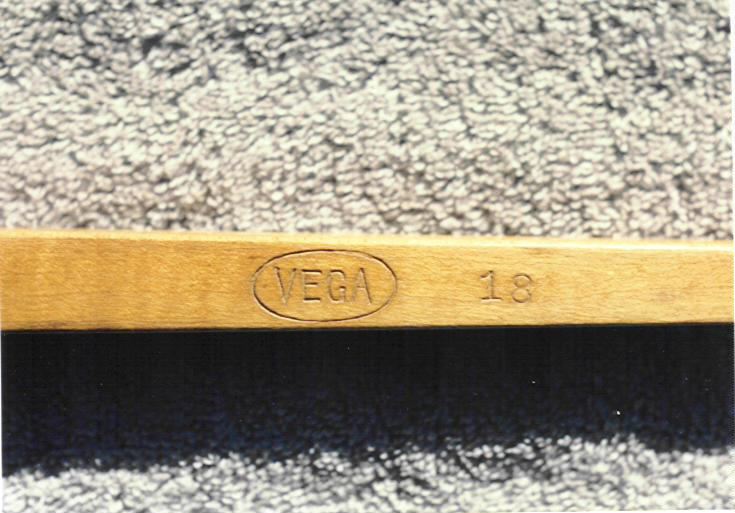
serial numbers on the rim and stick, the only other markings are the word “Vega”
in large block letters within an oval and a comparable size, 2 digit number
(Photo below). At this time only 5 such banjos are known and I am quite anxious
to hear of any new discoveries. Two of them can be thought of as Regents and the
other three as variants. Here are the S/N s, the 2 digit numbers, and the main
peghead inlays:
22262…….18….. star
22868....... 17....... griffin
22943.….. 17....... star
22944....... 18....... star
24555....... 17.….. griffin
It is interesting to note that on 22262 and 22943, the star is less ornate than on
22944 and the board inlays are considerably more mundane. It seems almost certain
that 4 of these were made very close to the time of the fire but a full explanation
of the instruments and the 2 digit numbers is not currently possible. If one
postulates that carrying the Vega name means they were made right after the buyout,
then the lowest S/N(22262) should approximately equate to March 4, 1904, the date
of the fire. Questions abound; if you see another, please take the time to record
every detail you can think of to record.
About this instrument:
1) Perhaps a one-of-a-kind
banjo and fascinating.
2) The dowel stick is stamped
as described above.
3) Enigmatic but almost
surely made around the time of the fire.
4) Unusual and superbly done
inlay pattern highlighted by stars on the peghead and 5th fret that
are engraved in a very artistic manner.
Click to enlarge: