WS15-5
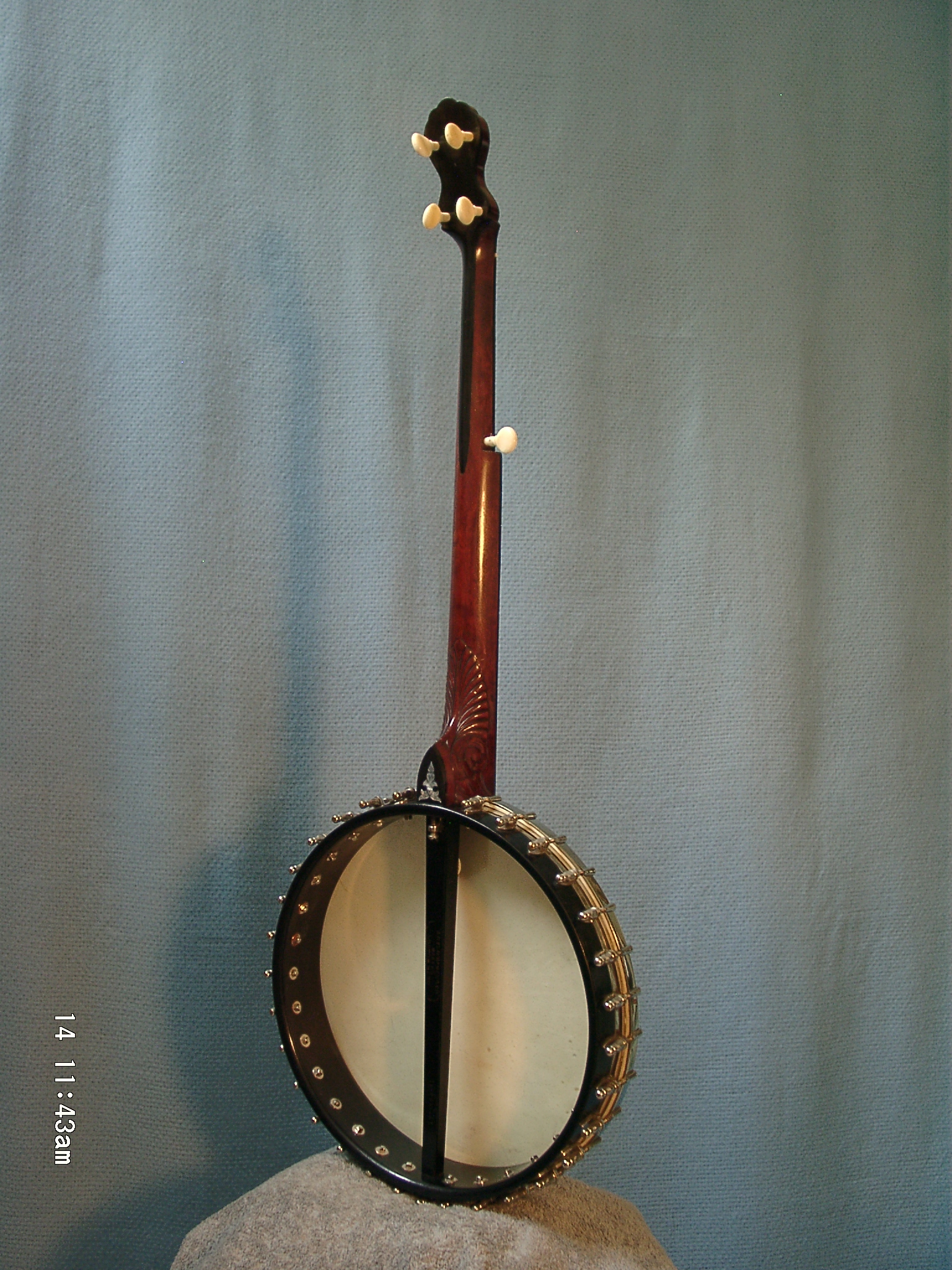
Fairbanks Imperial “ No. 3" 5
String
S/N: 15405
1896 12 3/8 x 26 ½ “ 4
½ lb.
Fully original.
Condition: Excellent.
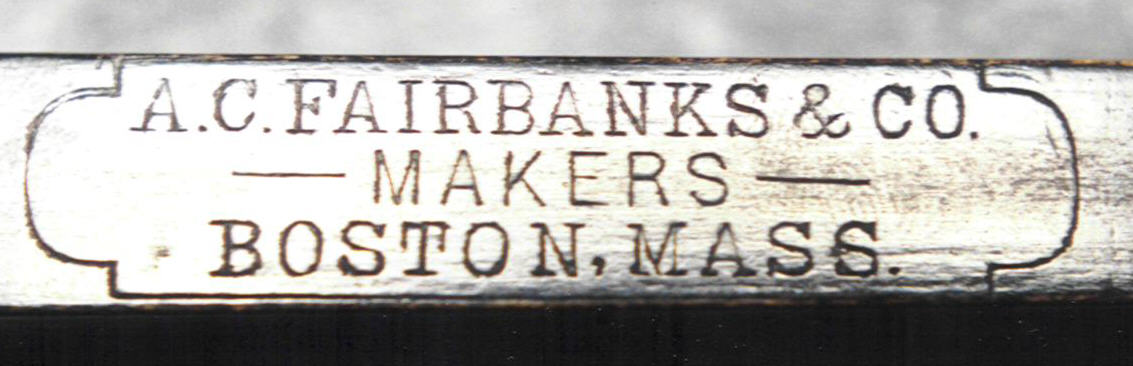
Background: After the split, Fairbanks
chose to continue producing some Fairbanks & Cole models. I have no idea for how
long or in what numbers. This Imperial is one such model. I am not aware of
another example precisely like this instrument. Notice that this is not an
Imperial Electric but an Imperial and I chose to put the No. 3 in quotation
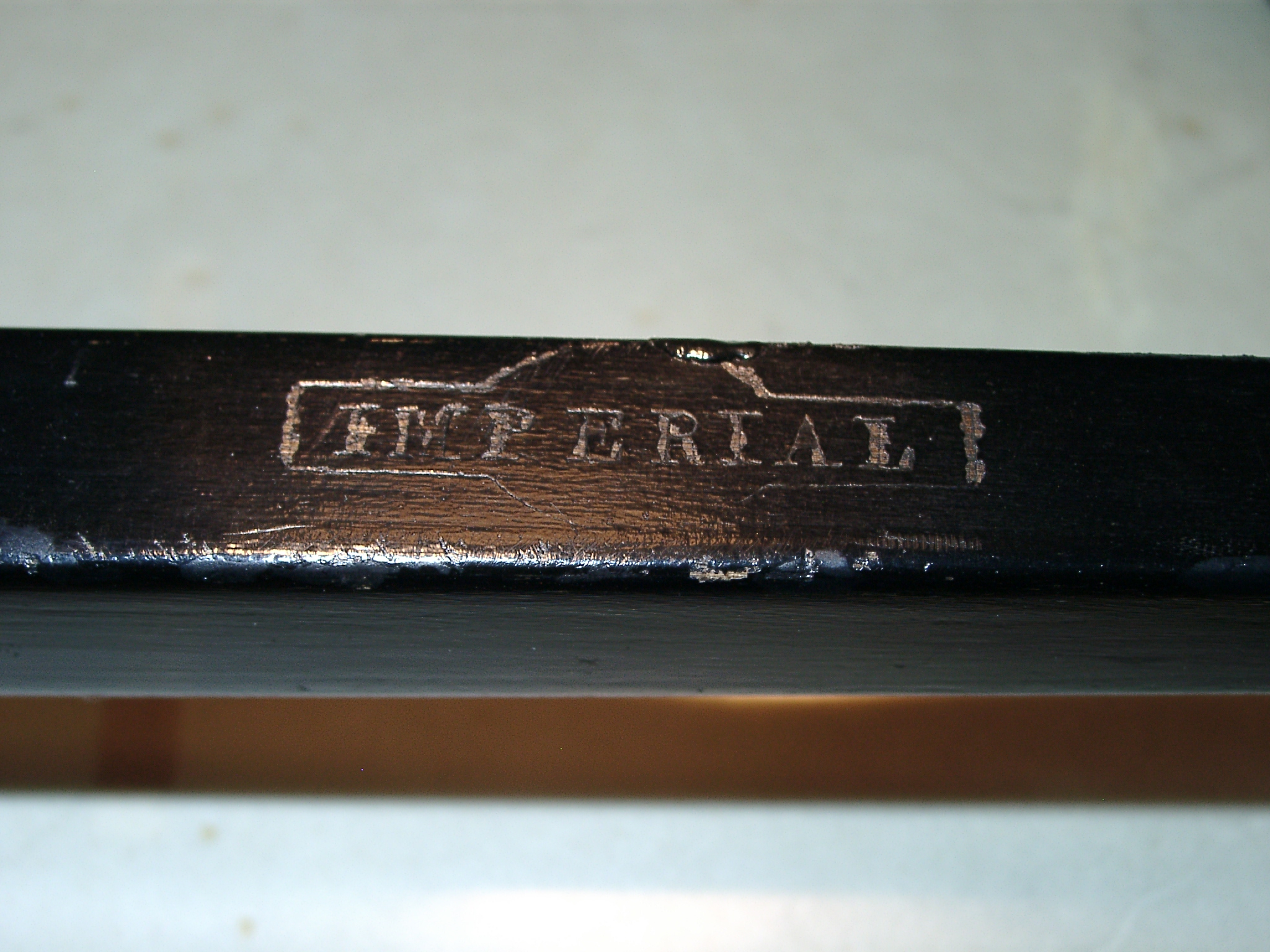
marks for several reasons. As seems to be the standard practice for No. 2 and 3
model instruments prior to the Whyte-Laydie line, no model number is stamped on
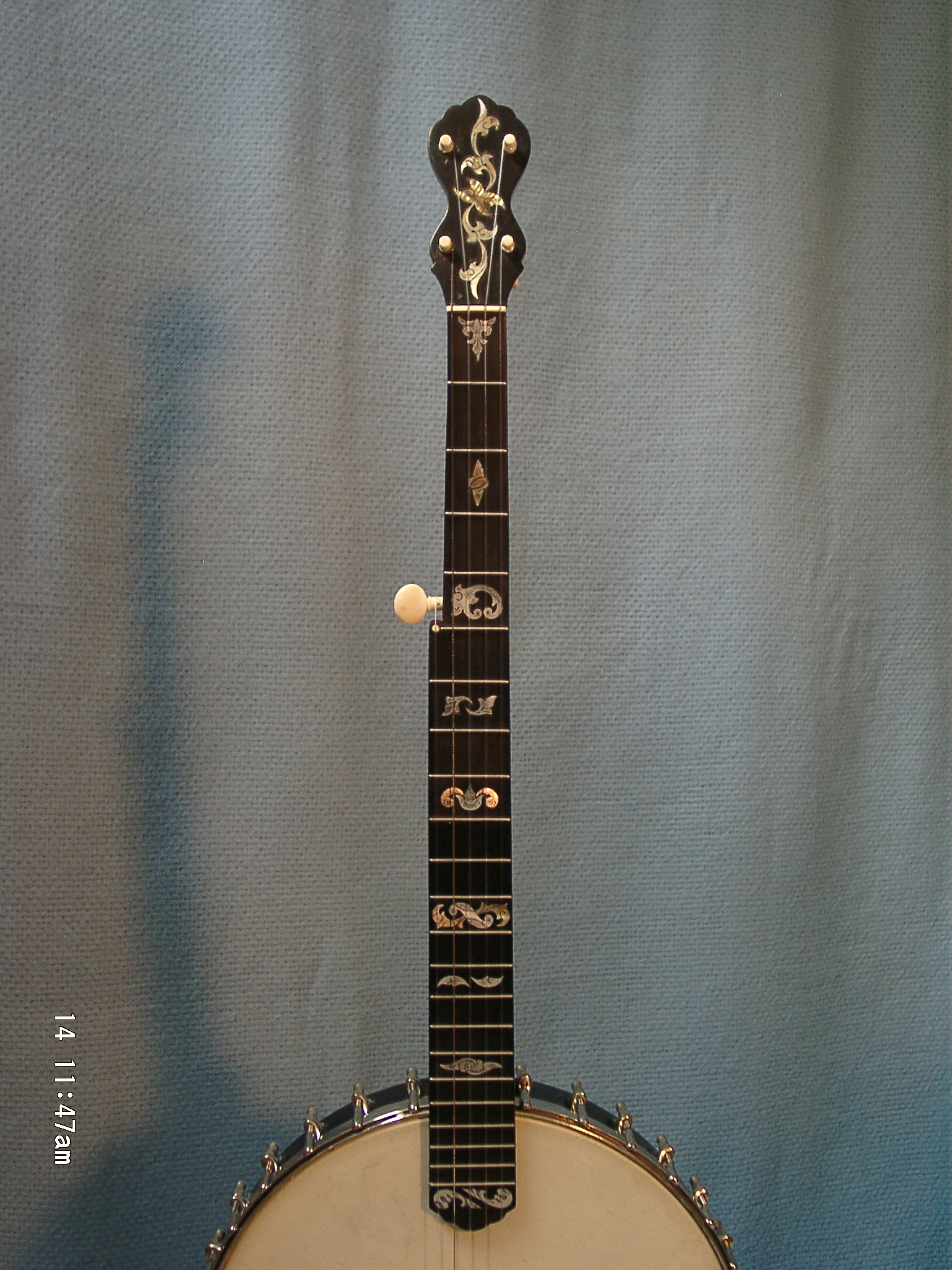
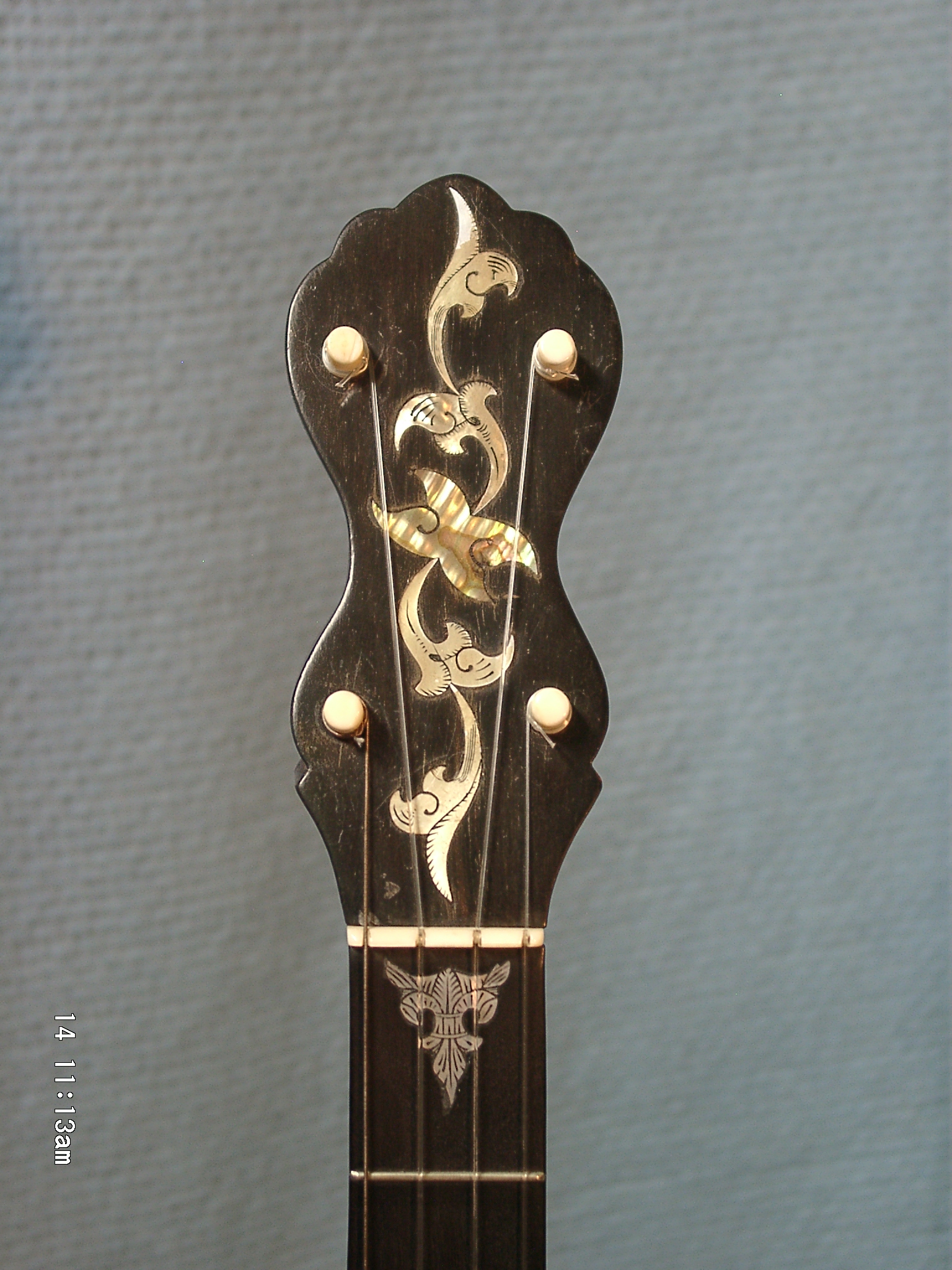
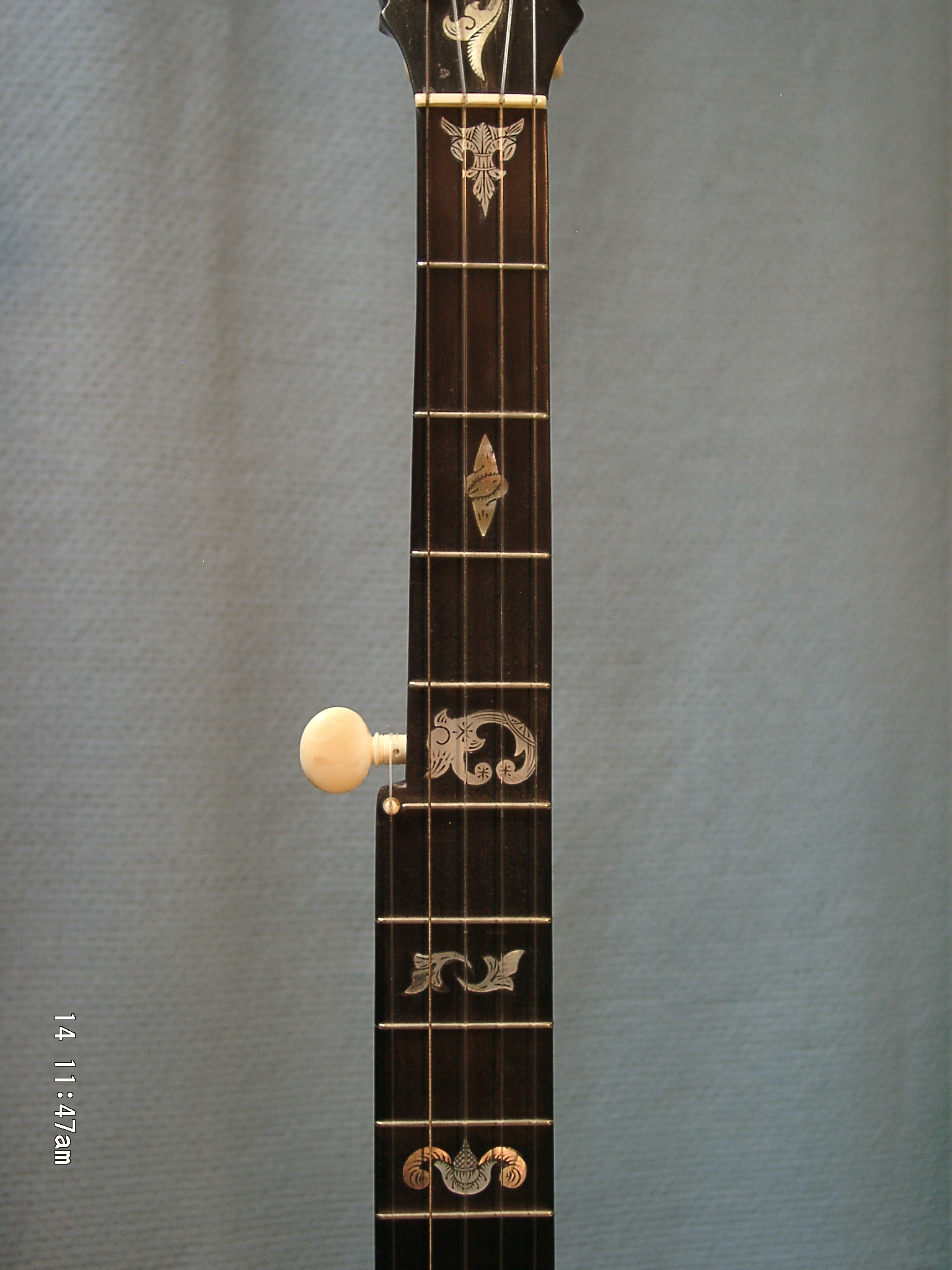
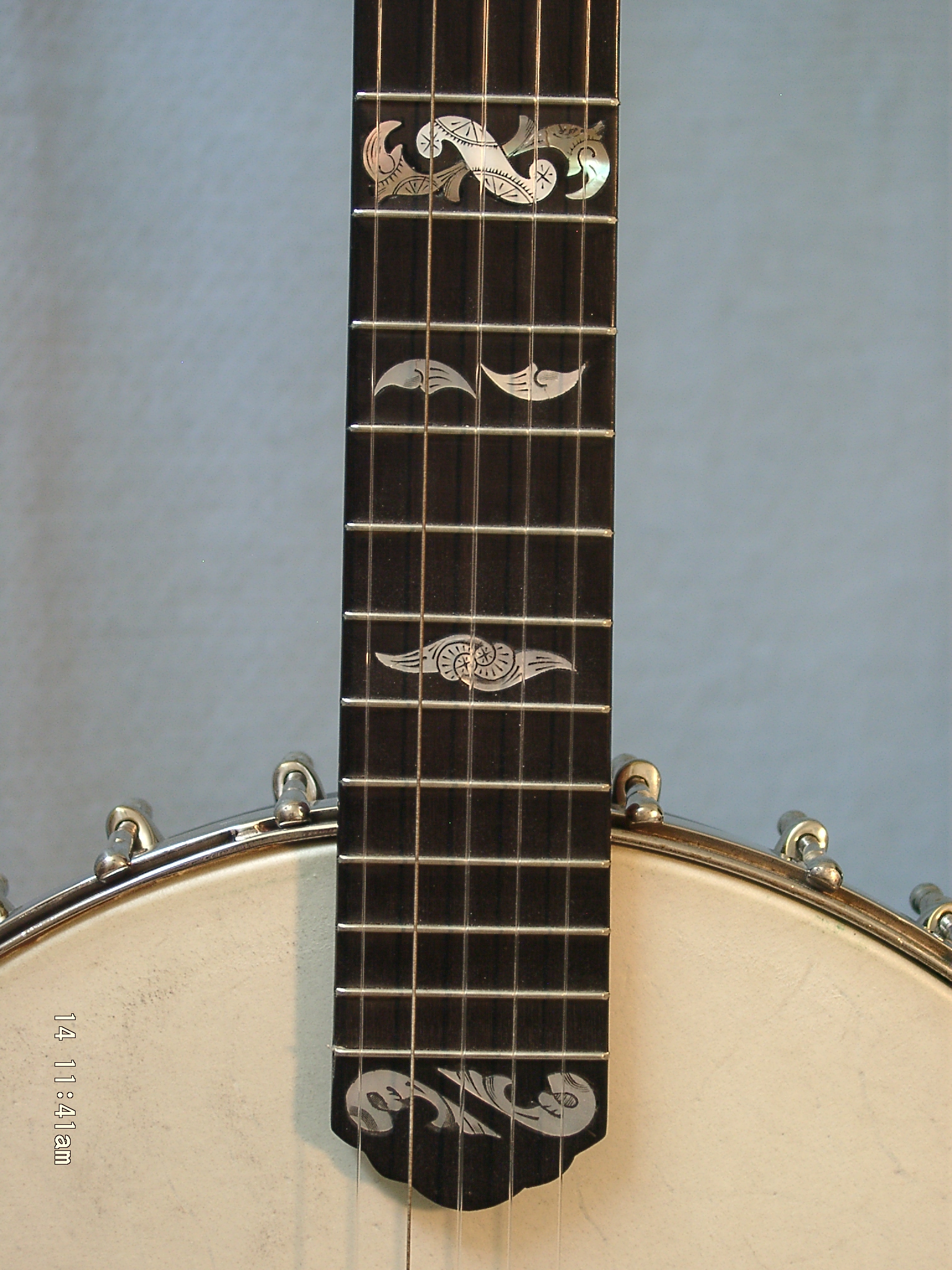
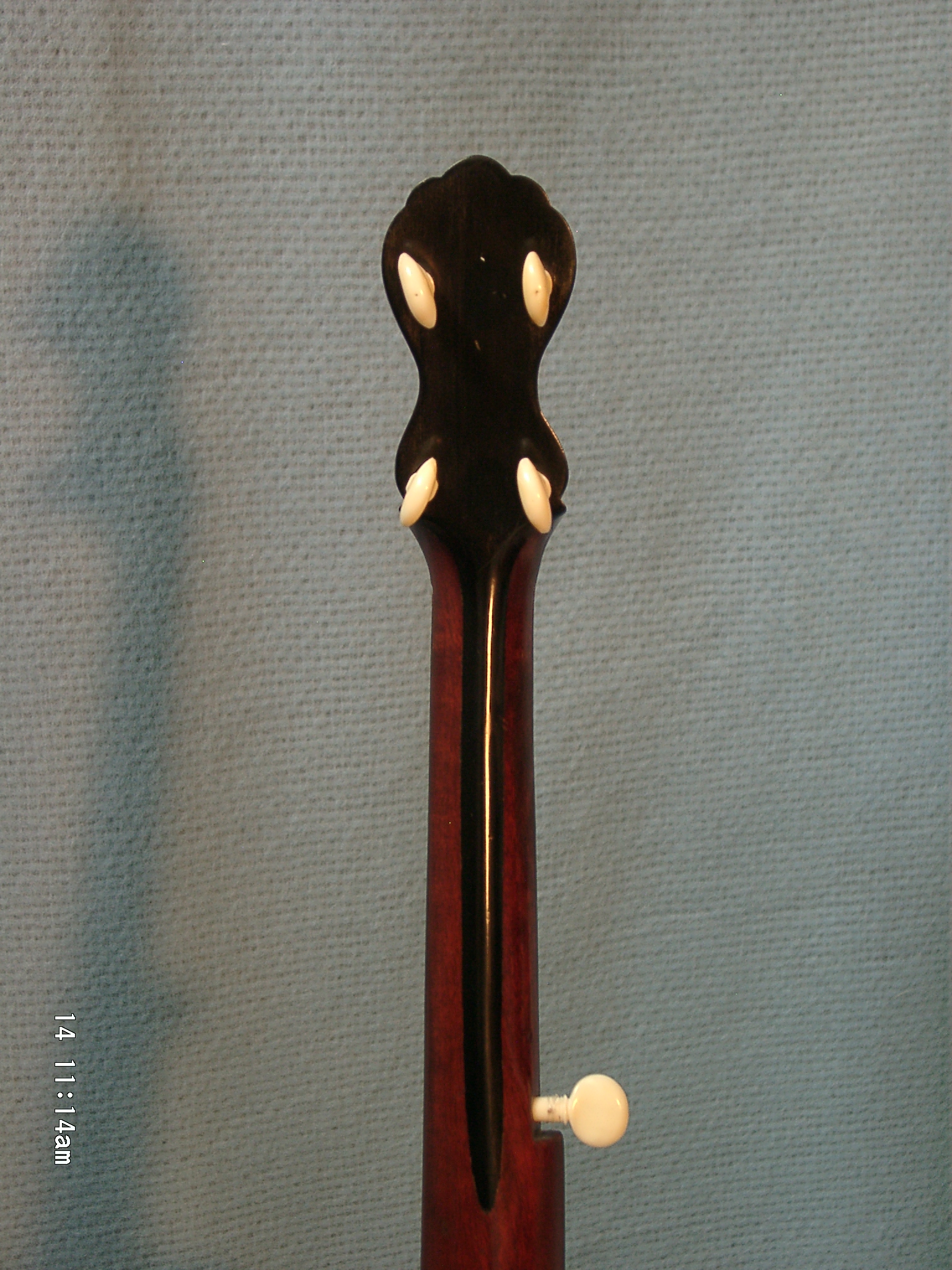
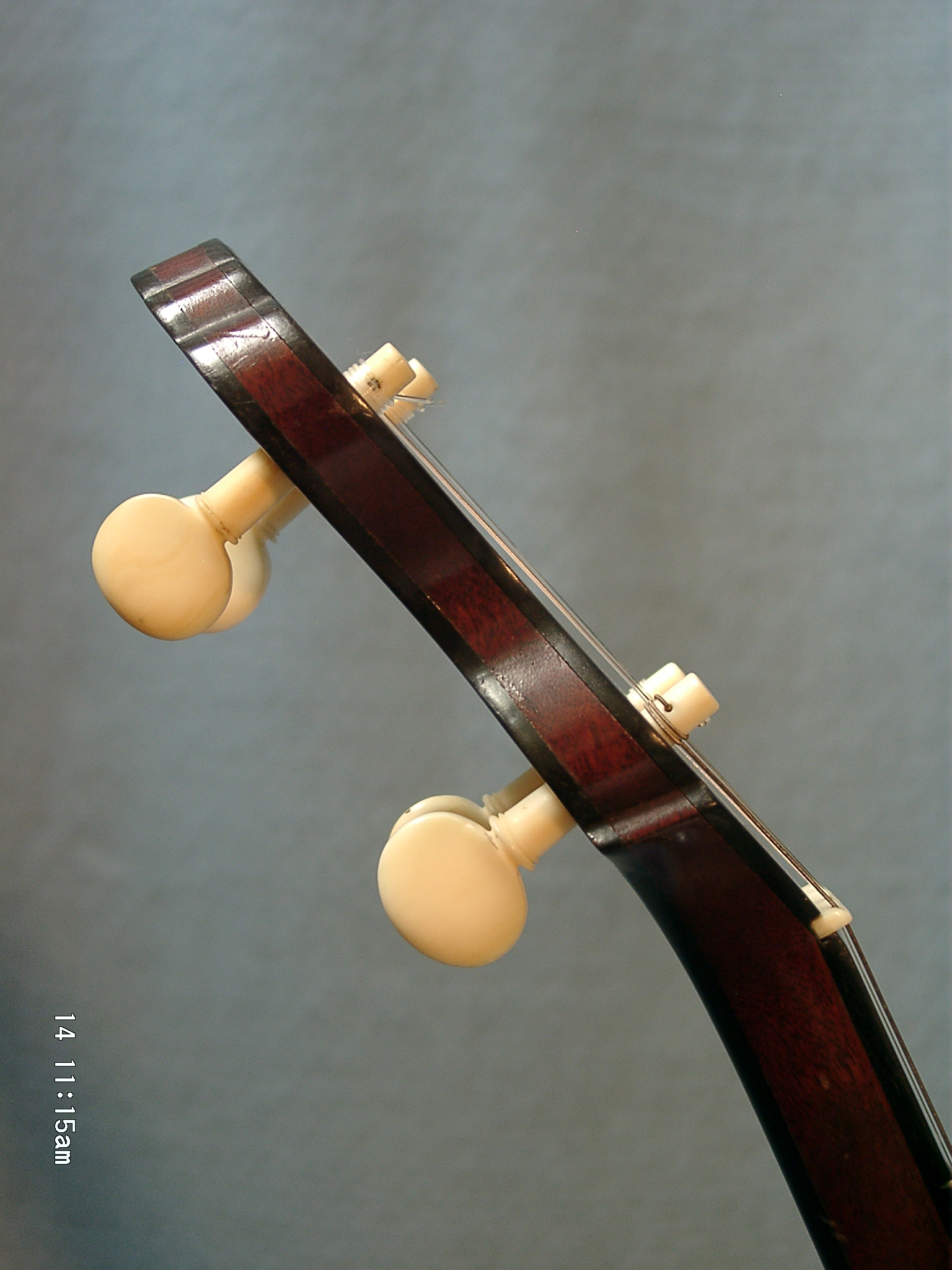
the dowel stick. At first glance the inlay patterns on the peghead and
fingerboard would seem to clearly justify a No. 3 classification. However, the
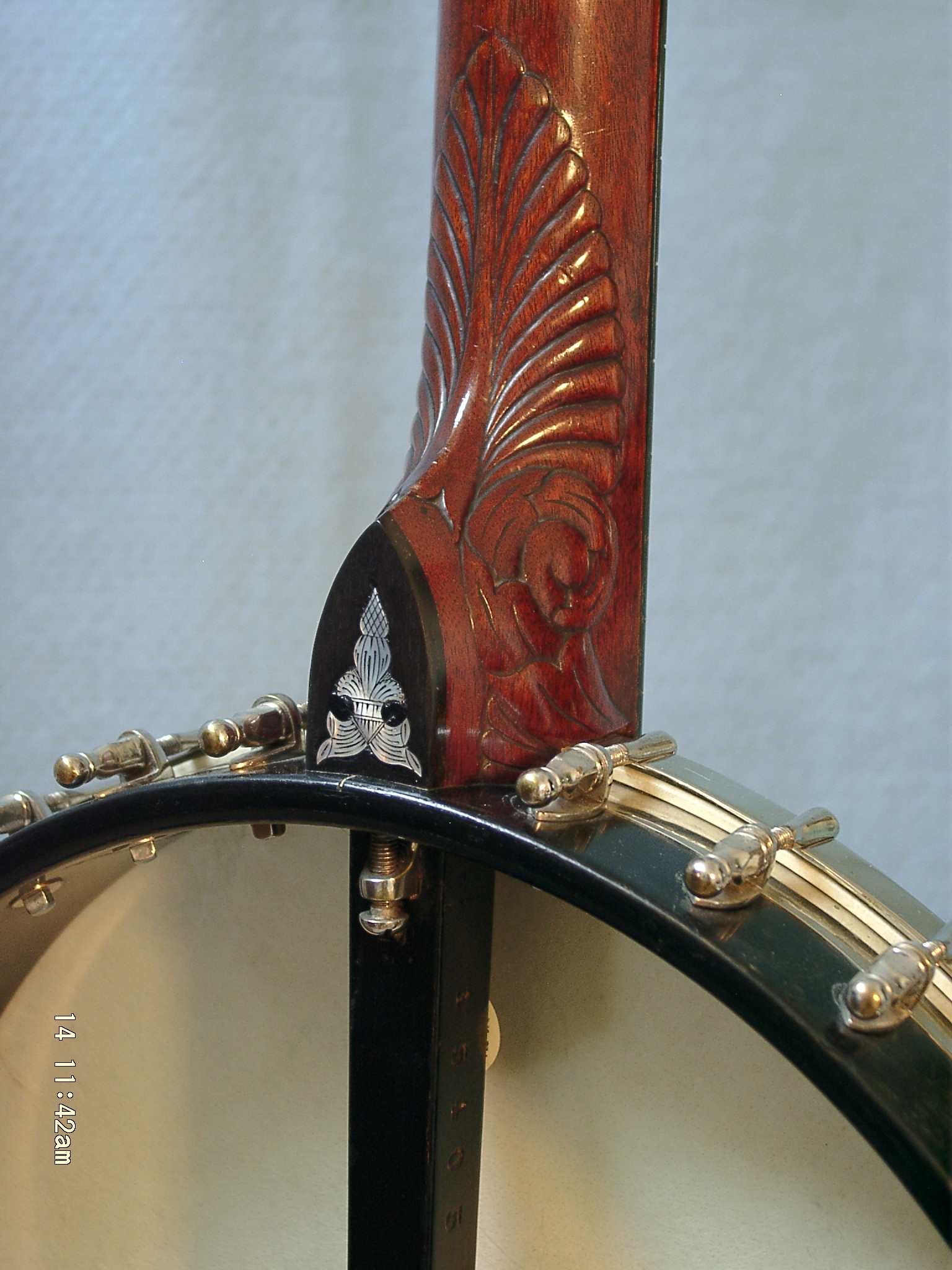
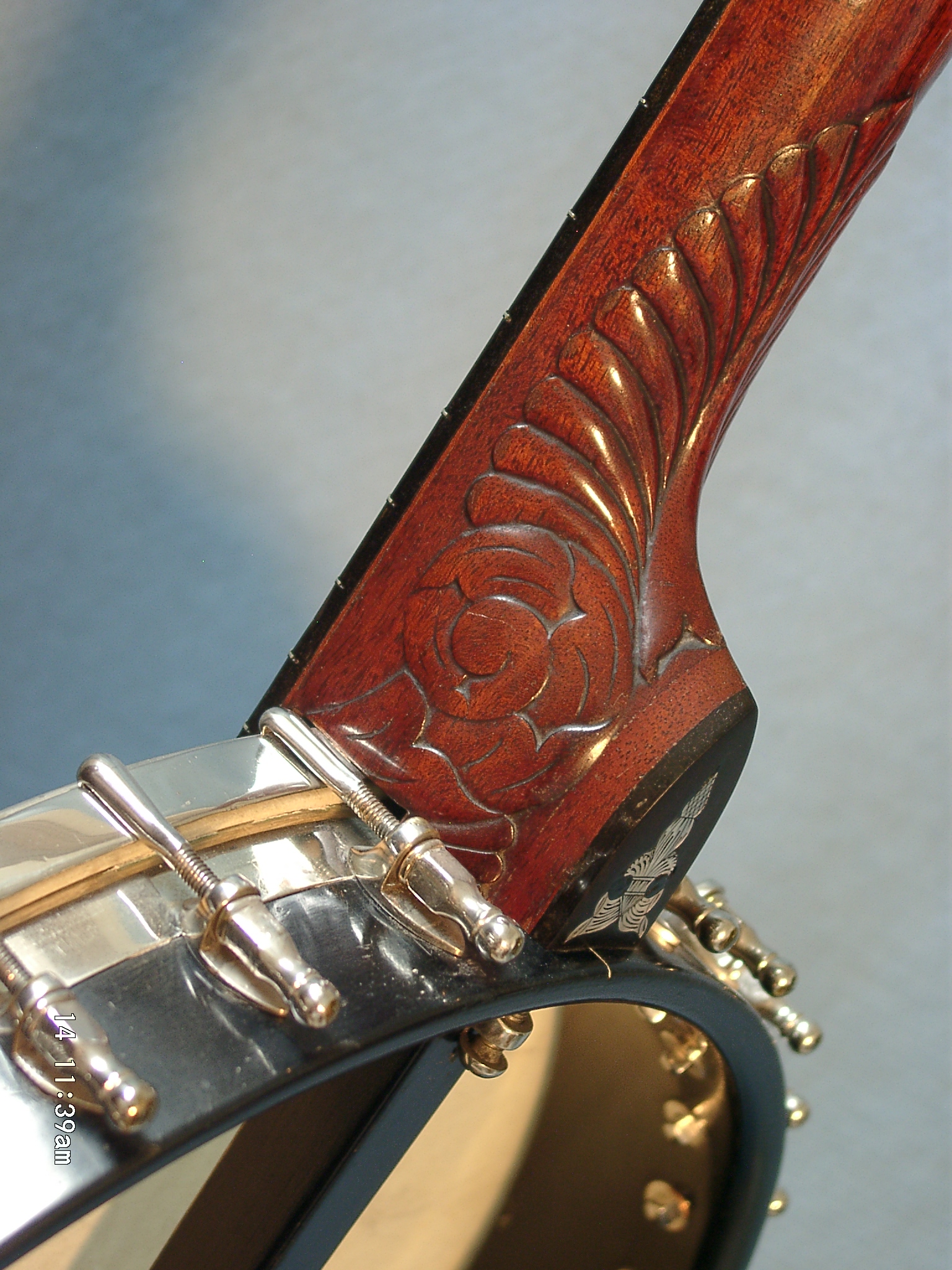
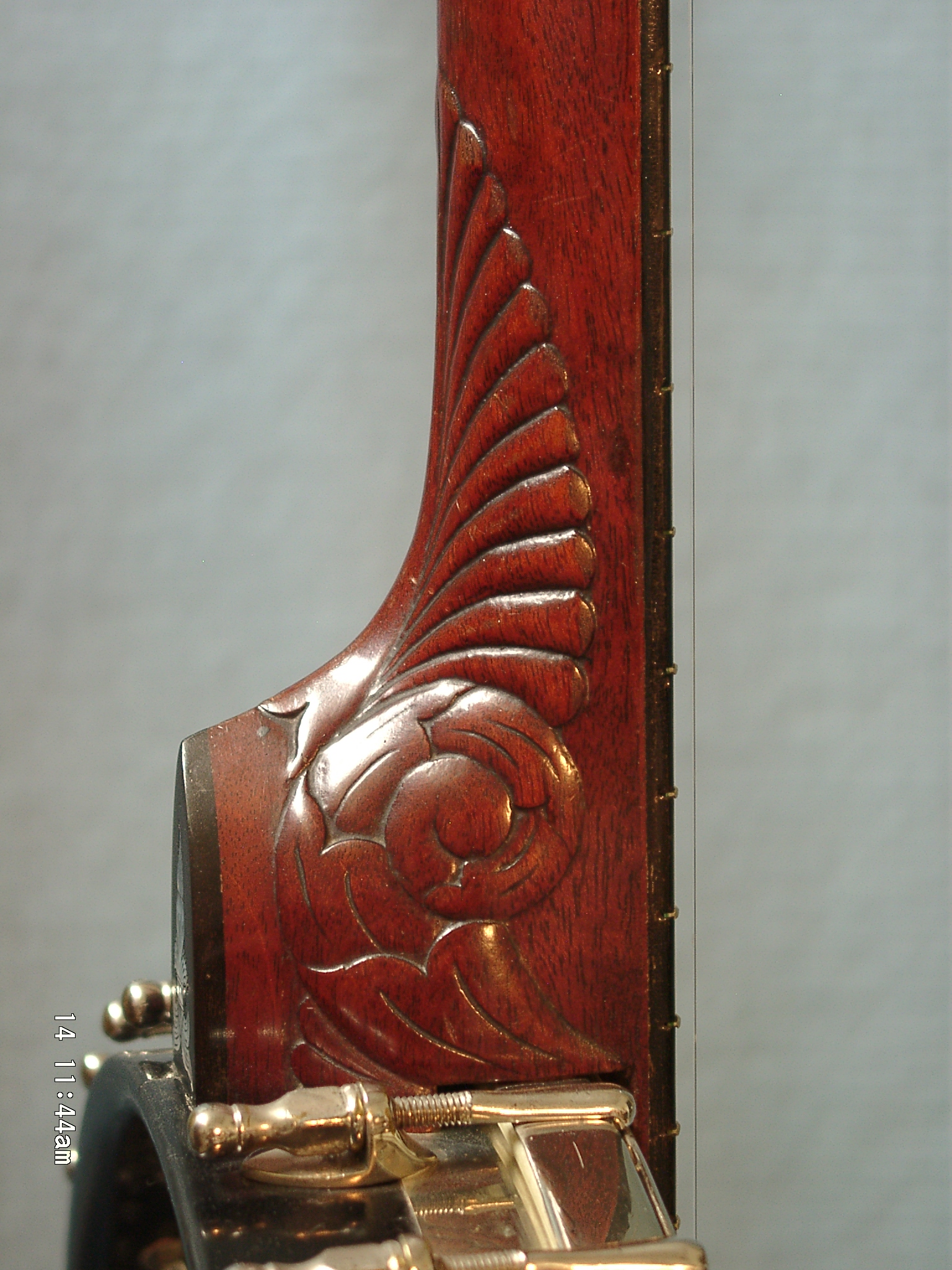
heel carving is typical for what appears on No. 2 models. In passing, I will
remark that I have always considered these to be artistically quite superior to
the No. 3 carving. With these idiosyncracies and several other features noted
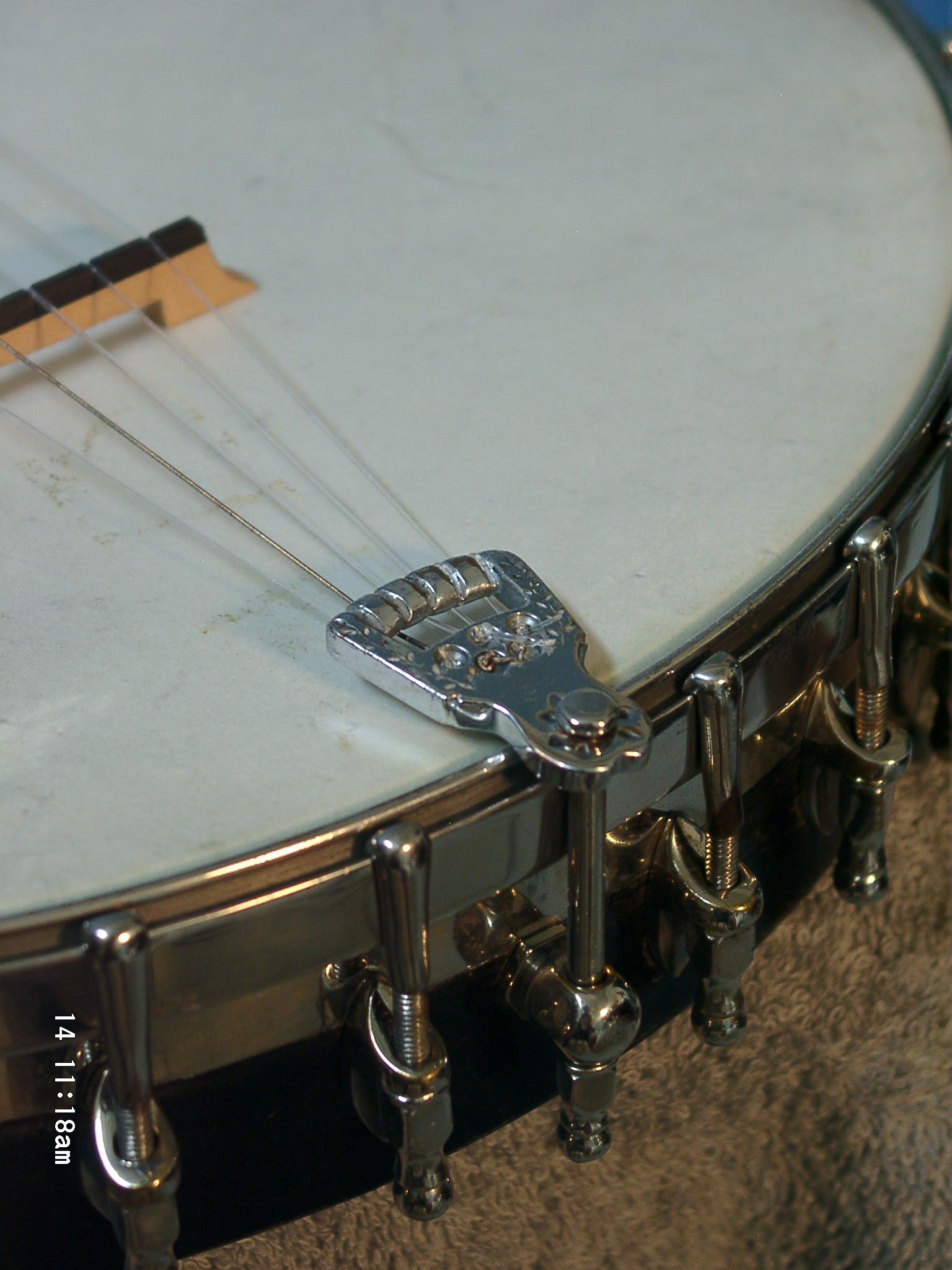
below such as the very unusual tailpiece, one could speculate about the
possibility of this being a custom instrument. At the very least, it certainly
has “personality” galore.
Also relevant to this banjo is information from the 1889 Fairbanks & Cole
catalog. With their introduction of the Le Grande Imperial model, they were
making the first banjo with a half spun rim as well as the first with an
extended fingerboard.
Features of Note:
1) Ex-Bollman Collection.
2) Inlay patterns of a No. 3
model combined with a heel carving of a No.2 model.
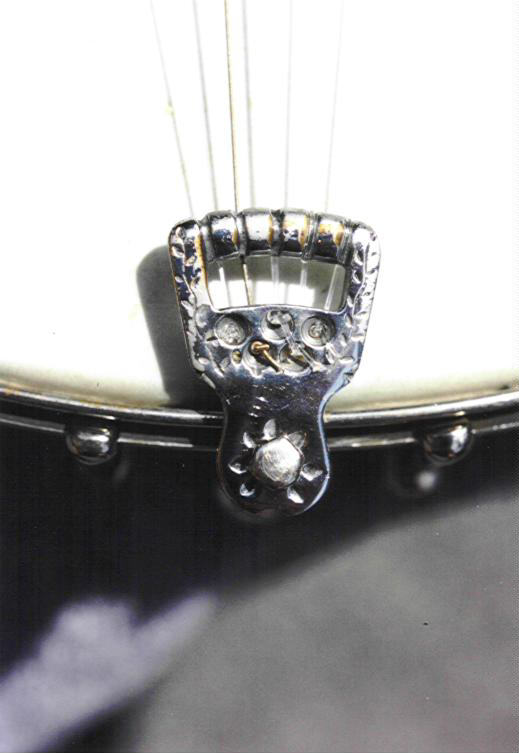
3) The tailpiece appears to be
an ivory one with carving up the sides and around the bolt ( typically used on high
grade models) that has somehow been nickel plated. Jim Bollman has never seen
another and feels comfortable that it is original to the banjo as made.
4) Extended fingerboard.
5) Ivory tuners.
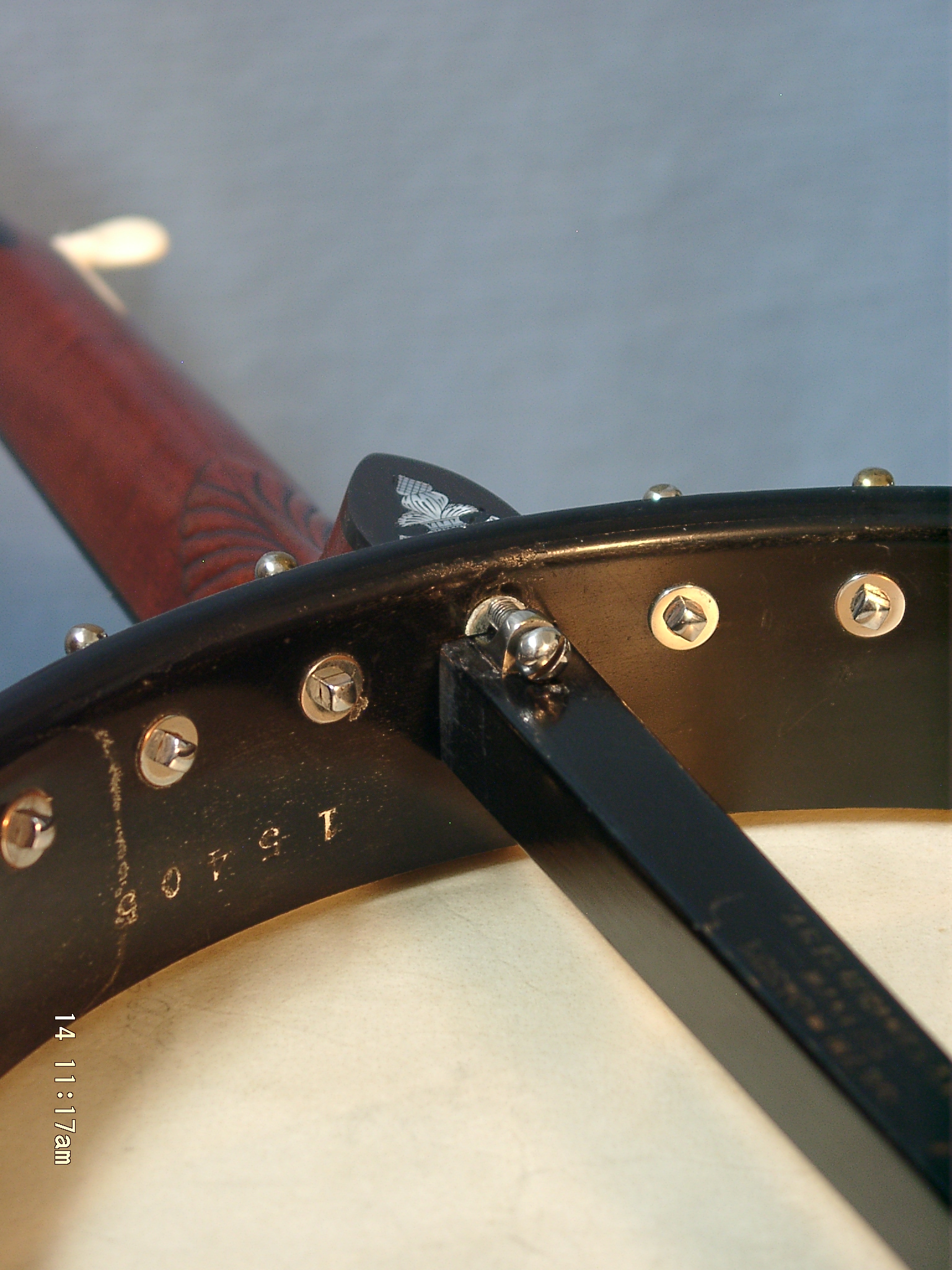
6) Flat ( Cobra) hooks with
square ( 4 sided) nuts as were often seen in the early years.
7) A very long backstrap that
extends well below the 5th peg.
Click to enlarge: