WS15-1
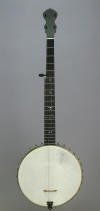
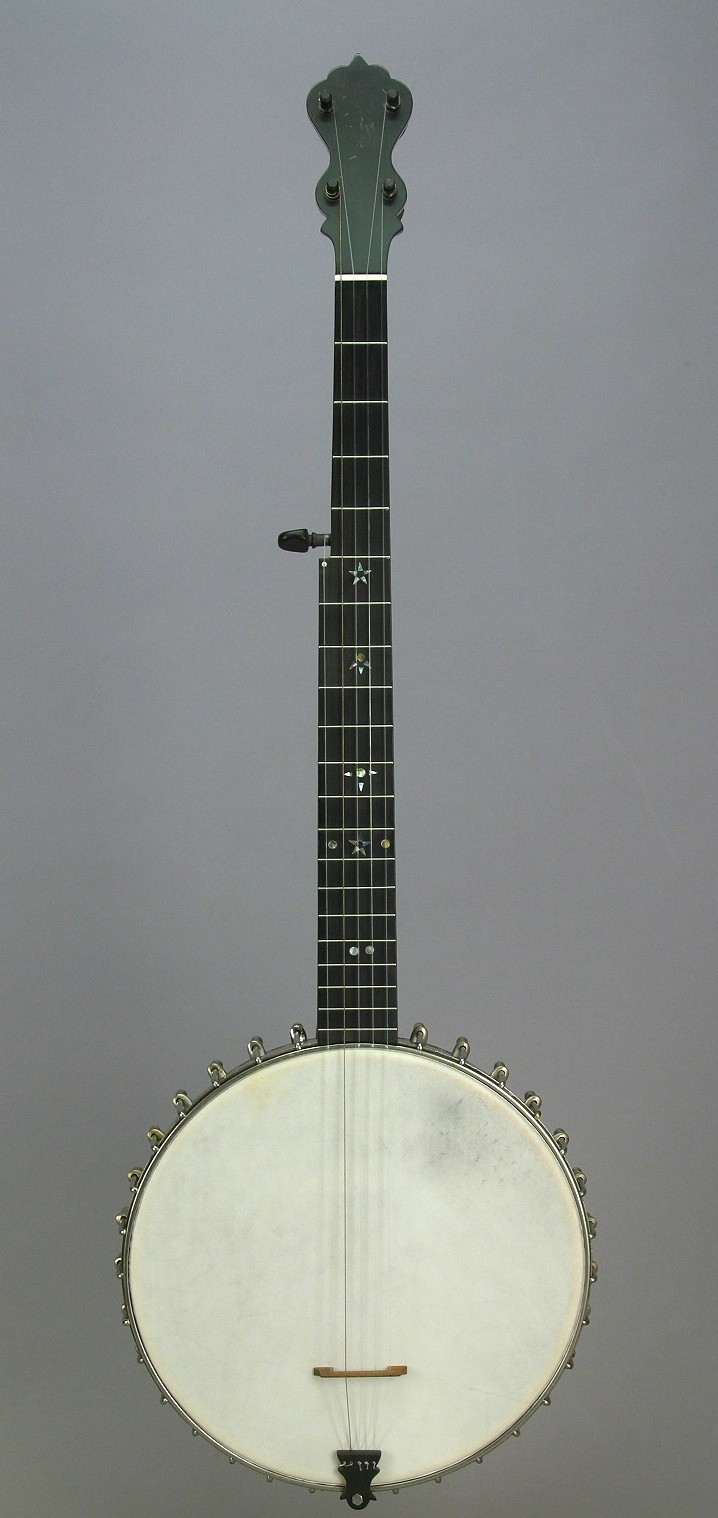
Fairbanks Un-designated Model 5
String
S/N:
340 circa 1879 11 3/8 x 27 1/4 “
4 1/8 lb.
Condition: Excellent.
NOTE: While setting up this web site, I traded
this banjo to Hank Schwartz. Having already prepared this information and
especially because these 1870s instruments so obviously set the stage for what I
call the “early style” of Fairbanks & Cole banjos, I have received his permission to
leave this info. on the site for the benefit of viewers. Photos I had taken were
lost in a computer crash and Hank was kind enough to provide those taken by
Frank Ford that appear here.
Originality: Moderate
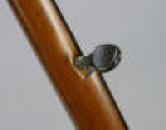
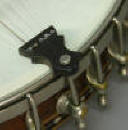
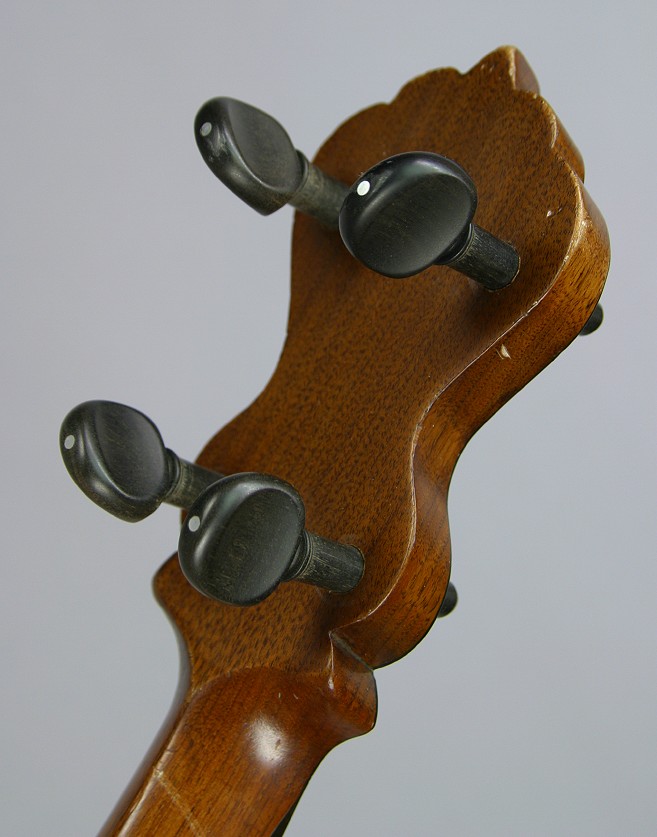
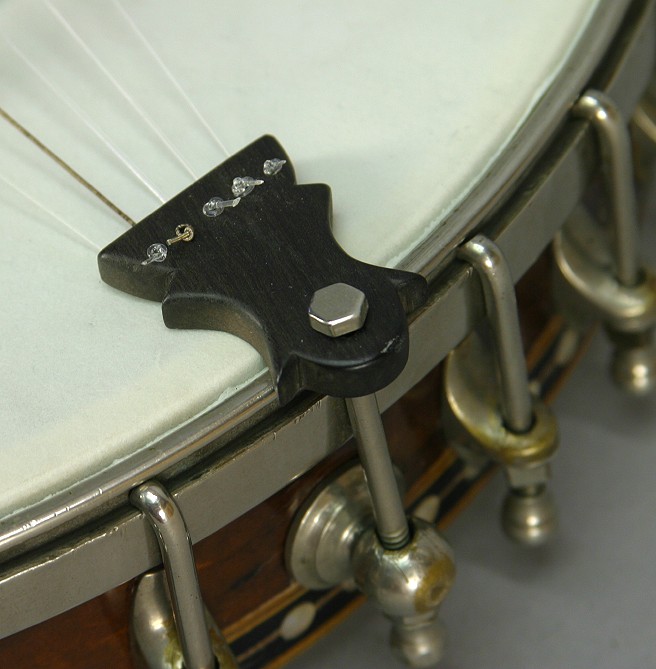
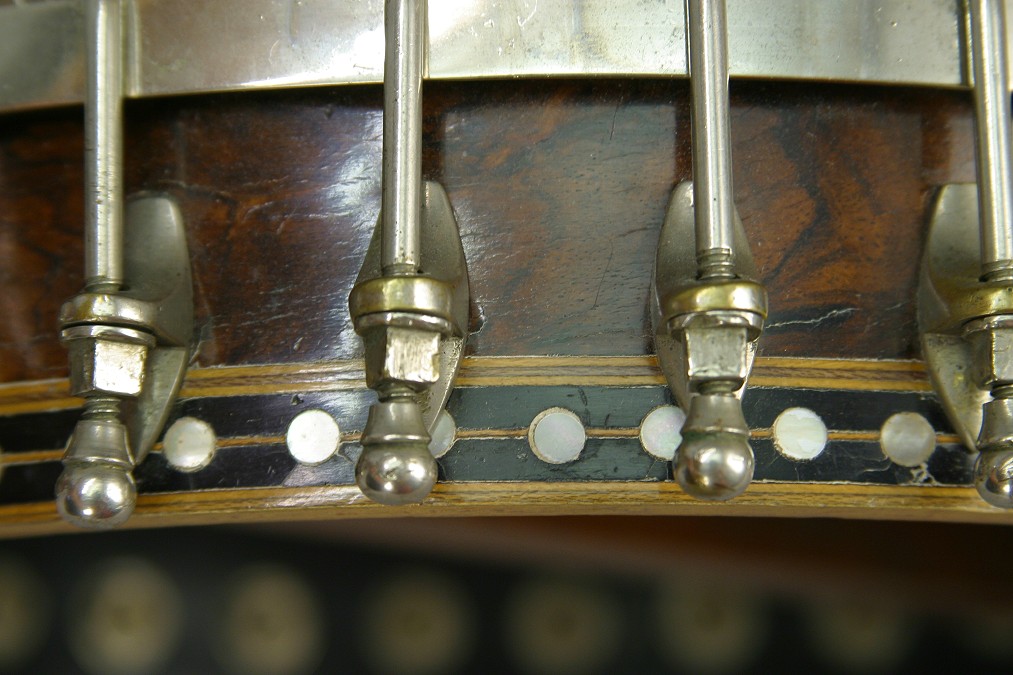
restoration. Tuners and tailpiece non-original. A few of the pearl dots around
the rim had to be replaced. The ball end portions of 7 nuts were missing and I
had them made.
Background: In about 1875 Fairbanks started
building banjos. No catalogs or company records exist and survivors are so rare
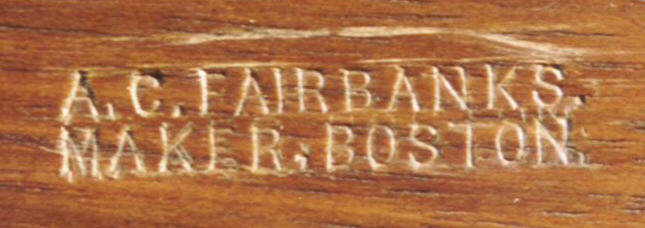
that gathering info. is difficult. Apparently all of these are stamped “ A. C.
Fairbanks, Maker. Boston” in 2 rows of small block letters on the dowel stick.
No named models have surfaced and are unlikely to exist. It is unknown how many
banjos he made before his partnership with Cole began in 1879. Surviving
examples exhibit widely varying details and make it obvious that Fairbanks was
experimenting and “feeling his way” along in this period.
Features of Note:
1) Ex- Bollman Collection.
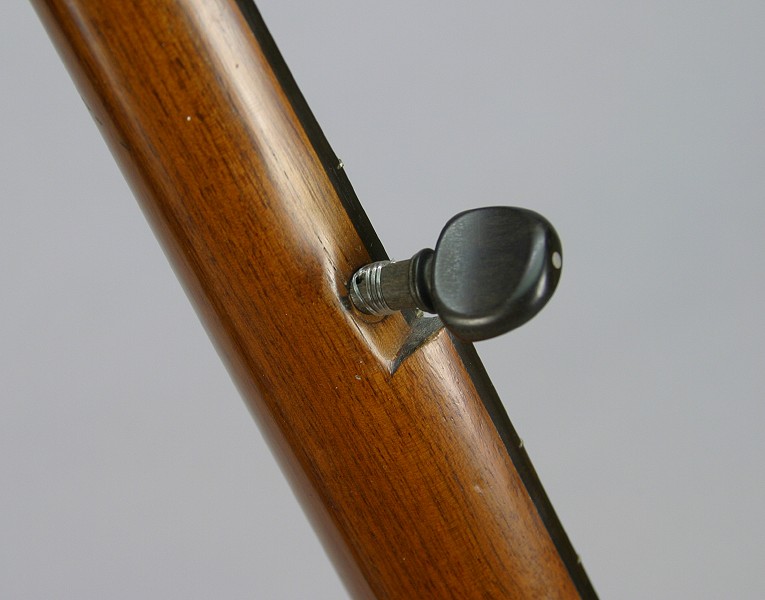
2) Mahogany or walnut neck
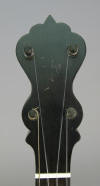
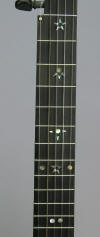
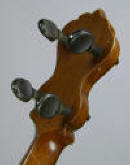
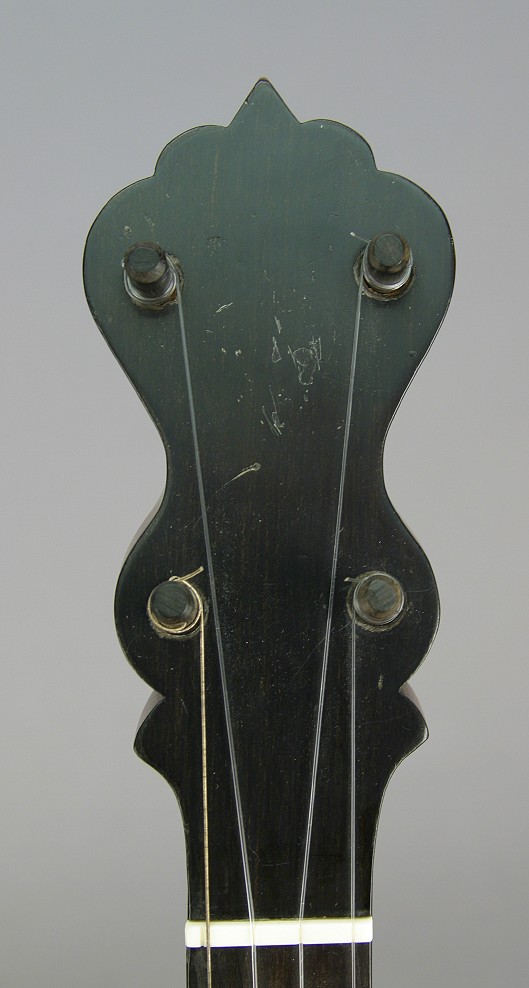
with a thick ebony fingerboard and very thin ebony peghead overlay.
3) Raised metal frets.
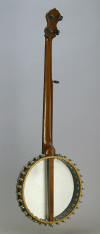
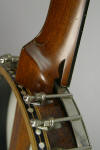
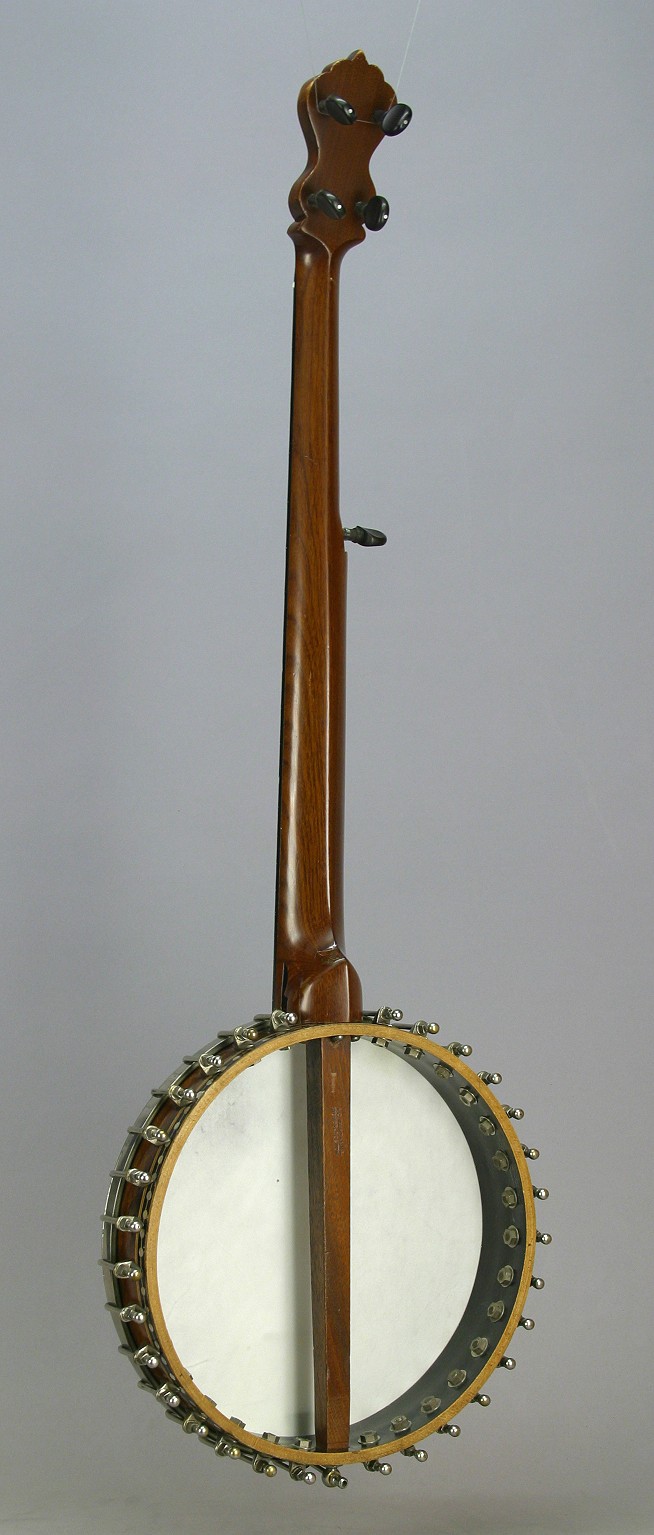
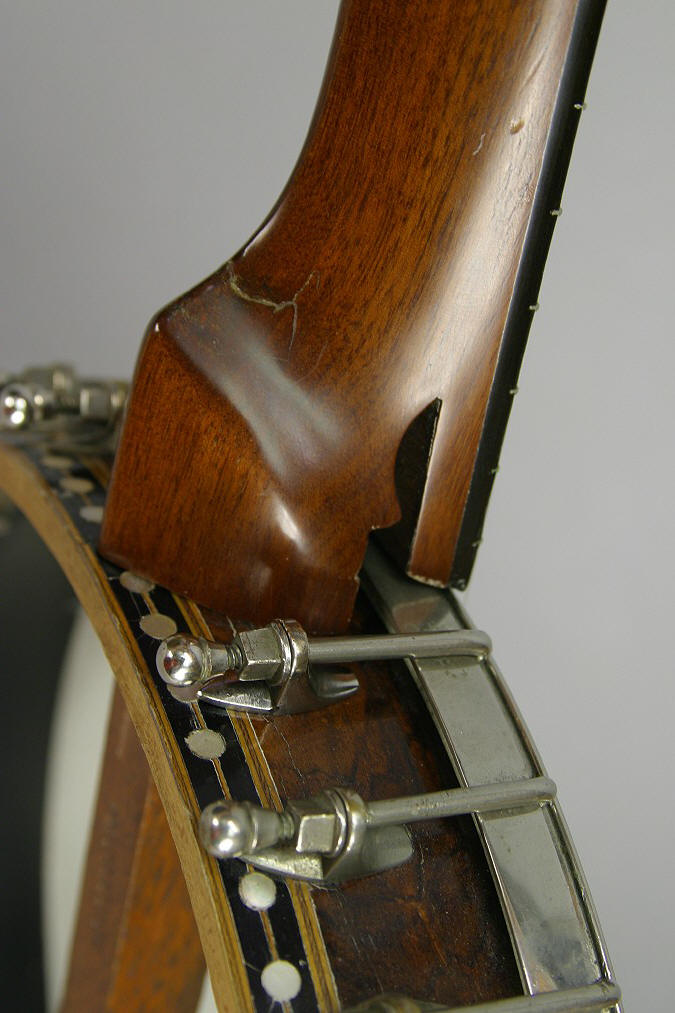
4) Heel is boat hull shaped.
These are commonly referred to as “Cole heels” because of his very consistent use of this shape
after he and Fairbanks split. This banjo makes that term misleading at best.
5) The heel also has an
appealing cut-out area near the rim.
6) Several features that
clearly foreshadow what I call the “early style” of Fairbanks & Cole models :
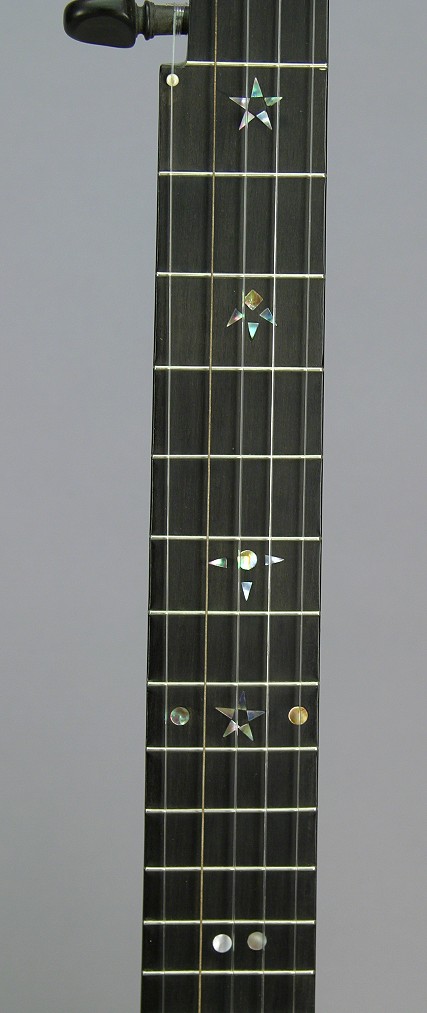
a) Large and very contoured peghead shape.
b) Board inlays made up of small geometric shapes and arranged to
make stars.
c) Inlays positioned at frets 6,8,11,and 13.
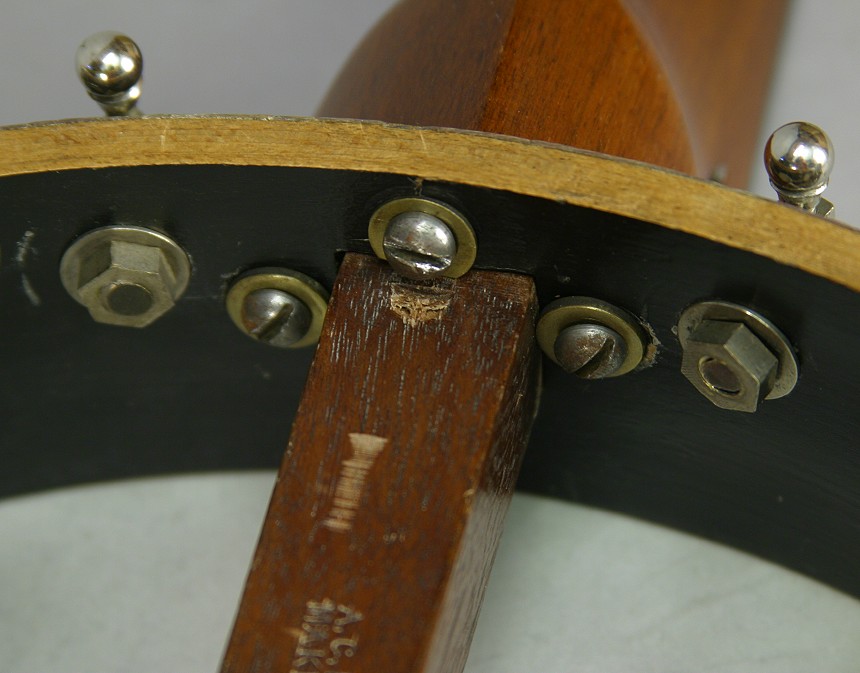
7) Remarkable contrast
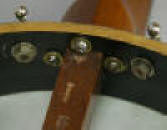
between the drab interior appearance of the pot( dull black paint, un-finished
bottom of the rim, and “hardware store” nuts and washers) and the lovely
exterior that features :
a) Lower rim decorated with pearl dots and wood inlay and upper rim covered with burl walnut veneer.
b) Tension hoop with raised inner edge that curves out over the
tops of the nuts and outer edge that is lowered to hide the flesh
hoop.
c) Very handsome low-profile shoes.
d) Two- part decorative nuts with tapered square upper portions
and lovely ball shaped lower portions that obviously led to later one piece ball end nuts.
8) Absence of any neck brace
and the heel is mounted to the rim by 3 large screws.
9) By comparing this
instrument with other survivors, I conclude it was likely one of the last ones made before the start of the
Fairbanks & Cole team.
Click to enlarge: